Class 7 . Social Science . Exploring Society India and Beyond Part I . How the Land Becomes Sacred
Chapter 8: How the Land Becomes Sacred
Ch 8
Social Science
Class 7
What is ‘Sacredness’
Sacredness — Deep religious or spiritual significance that makes a place, journey, route or land worthy of respect and reverence.
What Can Be Sacred?
- Sacred places include locations and shrines associated with the divine, spiritual figures or religious traditions.
- Sacred journeys include pilgrimages and the routes they follow; sometimes the land travelled across is sacred too.
- Sacredness connects religion and spirituality with geography and traditions.
Sacred Places Across Religions
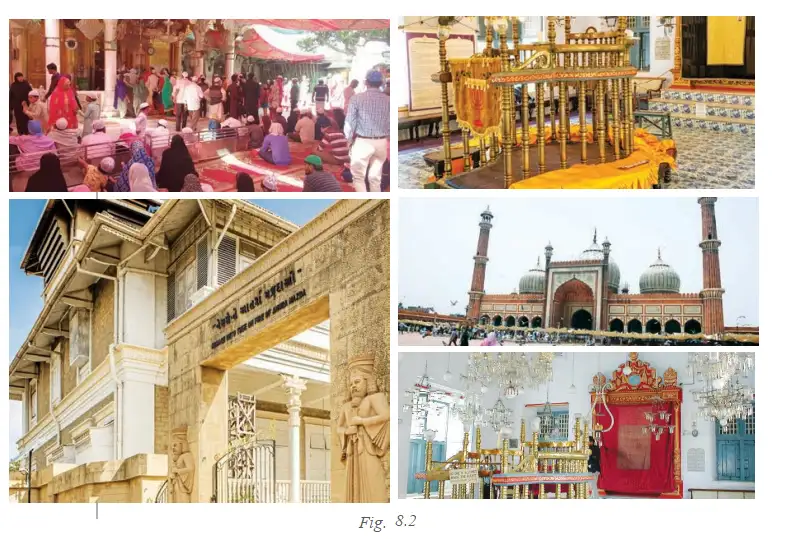
| Tradition | Examples and significance |
|---|---|
| Islam, Christianity, Judaism and Zoroastrianism | These religions originated outside India. Their sacred sites are visited for prayer and worship; people may make pilgrimages there on special occasions. |
| Shared visits | People from other faiths also visit places such as the Dargah Sharif at Ajmer, Rajasthan, and the Velankanni Church in Tamil Nadu. |
| Buddhism | Sacred sites are often places visited by the Buddha or places where his relics are kept. |
| Sikhism | Takhts are seats or centres of spiritual authority associated with Sikh Gurus. |
Important Buddhist and Sikh Sites
- Great Stūpa at Sanchi, Madhya Pradesh is a relic stūpa and an important Buddhist sacred site.
- Mahabodhi Stūpa at Bodh Gaya, Bihar is traditionally associated with the place where the Buddha attained enlightenment; it receives more than four million visitors each year.
- Sikh takhts include Takht Sri Patna Sahib in Patna, Akal Takht at the Golden Temple in Amritsar, and Takht Sri Keshgarh Sahib at Anandpur.
- Golden Temple in Amritsar is a famous Sikh holy place; its upper floors are covered in gold, and it stands amid the sacred pool called the Amrit Sarovar.
- Sikh pilgrimage: Sikhs aspire to visit important takhts at least once in their lifetimes because they are associated with important Sikh Gurus.
Pilgrimage Traditions Across India
- Sikh tradition records pilgrimages by several Gurus, including Guru Nanak, to Haridwar, Prayag, Mathura, Varanasi, Ayodhya and Puri, as well as to some Muslim shrines.
- Pan-Indian pilgrimage span stretches from Badrinath, Kedarnath and Amarnath in the snowy Himalayas to Kanyakumari in the south.
- Shared culture: Pilgrimages between the north and south have helped express a feeling of one country and one culture.
- Pilgrimage
- A journey to a sacred place that is significant within a religion or belief system.
- Shrine
- A place regarded as holy because of its association with the divine, a sacred relic or a spiritual figure.
- Relic
- A part of a spiritual figure’s body, or sometimes one of their belongings, kept as an object of reverence.
- Takht
- A Sikh seat or centre of spiritual authority.
Pilgrimage and Shared Culture
- 1961Jawaharlal Nehru described pilgrimages across India as expressing a sense of one country and one culture.
What makes a place sacred, and what is a pilgrimage?
Give examples of important Buddhist sacred sites and explain their significance.
Quick recap
- Sacredness means deep religious or spiritual significance deserving reverence.
- A place, shrine, pilgrimage, route or stretch of land can be sacred.
- Sacred places belong to many religions, and people of different faiths may visit them.
- Buddhist sacred sites are often linked to the Buddha or to his relics.
- Sikhs aspire to visit important takhts at least once in their lifetimes; the Golden Temple stands beside the sacred Amrit Sarovar.
- Pilgrimage places extend from the Himalayan sites of Badrinath, Kedarnath and Amarnath to Kanyakumari.
- Pilgrimages across India have helped express a sense of shared country and culture.
Pilgrimages
Pilgrimages and Tirthas
Tirtha — Literally, a place to cross a river or other body of water; symbolically, a passage from ordinary worldly life to higher spiritual life.
- Pilgrimage (tirthayatra): A journey to sacred sites that is both physical travel and an inner spiritual journey.
- Conduct: Pilgrimage involves following a specified code of conduct.
- Sacred geography: For at least 3,000 years, pilgrims have travelled across the Subcontinent, helping make its geography sacred.
A Long Tradition of Pilgrimage
- For at least 3,000 yearsPeople have travelled on pilgrimages across the Subcontinent, historically without modern transport.
A Long Pilgrimage Across India
- Dharampal’s account: A group from two villages north of Lucknow had spent three months travelling to Rameswaram and other places.
- Journey onward: They passed through Delhi only to change trains before going to Haridwar and then returning home.
- Provisions: The group carried bundles, earthen pots and food necessities such as flour, ghee and sugar.
Pilgrimage in Jainism
Tirthankara — Literally, someone who makes a tirtha by guiding the crossing from ordinary to higher life; in Jainism, a supreme preacher of dharma.
- Sacred places: Jain tirthas include places where Tirthankaras attained liberation or where important events in their lives occurred.
- Sacred natural sites: Trees, ponds, hills and mountains visited or used for meditation by Tirthankaras are also revered.
- Examples: Mount Abu, Girnar and Shatrunjaya Hill in Saurashtra, Gujarat.
Sabarimala Pilgrimage
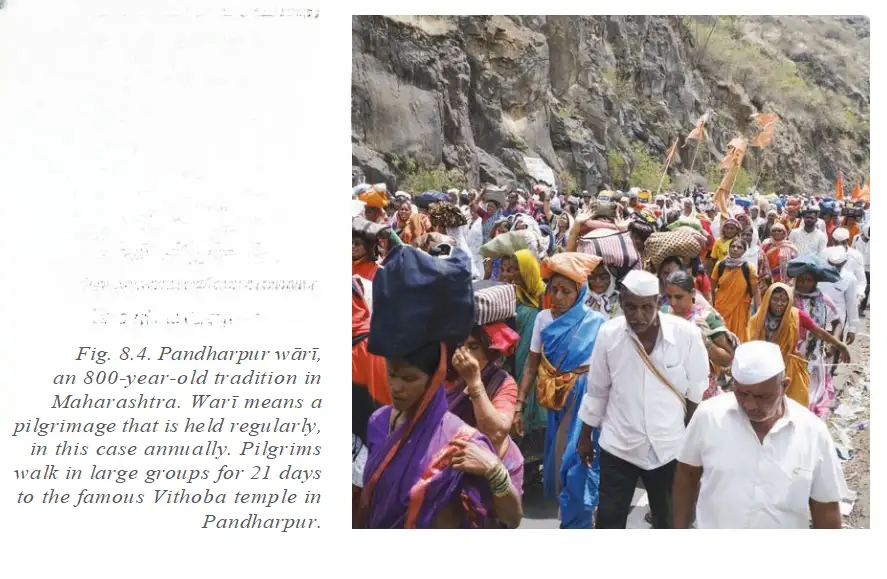
- Sabarimala: A hilltop temple in Kerala dedicated to Ayyappa; it draws over ten million devotees every year.
- Traditional route: The shrine was reached by a difficult trek through hills and forests.
- Meaning of the trek: Its challenge symbolises the difficulties of the inner spiritual path; natural landmarks along the route are also considered sacred.
Nature as Sacred
- Hindu, folk and tribal traditions: Mountains, rivers, trees, plants, animals and sometimes stones are regarded as sacred.
- Divine natural features: Particular mountains, rivers and forests may be worshipped as deities; many rivers are viewed as goddesses, and some trees, animals and plants are especially holy.
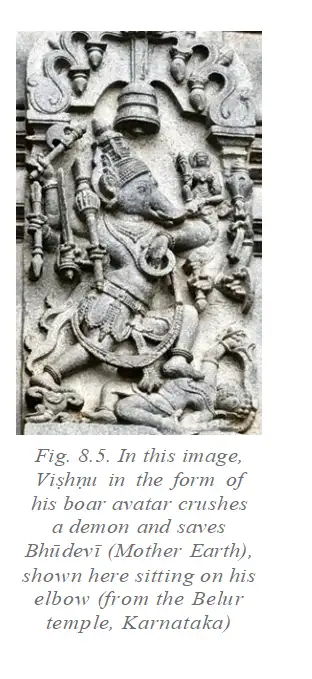
- Mother Earth: The belief in divine presence throughout Nature can extend to the whole planet, revered as Mother Earth or Bhudevi.
Sacred Landscapes and Protection
- Niyam Dongar, Jharkhand: Sacred to the Dongria Khond, who believe it is the abode of Niyam Raja, their supreme deity and provider.
- Protection at Niyam Dongar: Cutting trees is prohibited and is regarded as disrespect towards the deity.
- Sikkim: In the early 2000s, the government identified sacred mountains, caves, lakes, rocks and hot springs for protection from damage.
- Nilgiris, Tamil Nadu: The Todas associate many sacred peaks with their gods; sacred places also include ritual plants, Shola forests, wetlands, particular stones and individual trees.
Protection of Sacred Natural Sites
- Early 2000sThe Government of Sikkim identified sacred natural sites to protect them from damage.
- Tirtha
- A place to cross water, symbolising a passage to spiritual life.
- Tirthayatra
- A pilgrimage to sacred places.
- Tirthankara
- A Jain supreme preacher of dharma; literally, someone who makes a tirtha.
- Bhudevi
- Mother Earth, revered as sacred.
What is a tirtha, and what does it symbolise?
Why are natural places sacred in many Hindu, folk and tribal traditions?
Quick recap
- Pilgrimage is both travel to sacred places and an inner spiritual journey guided by a code of conduct.
- A tirtha is literally a water-crossing place and symbolically a passage towards spiritual life.
- Jain tirthas include places connected with Tirthankaras and natural sites they visited or meditated at.
- The difficult traditional trek to Sabarimala represents the challenge of the inner path.
- Many traditions view natural features—and ultimately the whole Earth—as sacred.
- Communities and governments protect sacred landscapes such as Niyam Dongar and sites in Sikkim.
Becoming Aware of Sacred Geography
Sacred Networks Across the Subcontinent
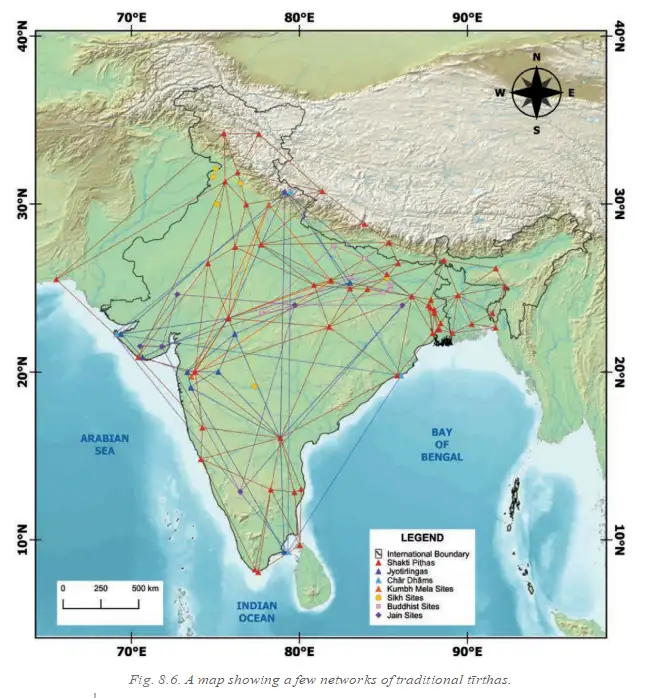
Sacred geography — A network of sacred places that connects different parts of a region, making the land itself sacred.
| Network | Key features |
|---|---|
| Char dham | Four sites placed in the southern, northern, eastern and western parts of India; pilgrims aspire to visit them. |
| 12 jyotirlingas | Twelve highly auspicious shrines dedicated to Shiva, each with its own name and mythology. |
| 51 Shakti pīṭhas | Places where parts of the divine mother’s body are believed to have fallen; they cover India and parts of present-day Bangladesh and Pakistan. |
| Regional networks | Many other networks of sacred places connect locations within particular regions. |
How Sacred Networks Shape the Land
- Spread and connection: Sacred places are distributed across India but are also linked through pilgrimage networks.
- Across the map: These networks cross the Subcontinent’s length and breadth, linking distant regions.
- Meaning: The connected sacred sites help make the whole land sacred.
The Story of the Shakti Pīṭhas
Story and Its Symbolic Meaning
- Sati, the divine mother, was insulted by her father and immolated herself.
- Shiva, her consort, was overcome with anger and refused to allow her last rites.
- To protect the world and cosmos, Vishnu used his chakra to cut up Sati’s body.
- The places where her body parts fell became the Shakti pīṭhas.
- The story’s symbolism: the whole land is understood as the body of the divine mother.
Pilgrimage, Travel and Cultural Integration
| Travellers | Purpose |
|---|---|
| Pilgrims | Visit major sacred places connected with their faith. |
| Merchants and traders | Travel to exchange goods. |
| Teachers, learners and belief-sharers | Discuss, debate and spread beliefs, or study with eminent teachers in other regions. |
What Travellers Encountered
- Geographical reach: Pilgrims visiting important sacred places naturally travelled across India.
- Differences: Travellers encountered different languages, customs, clothing and foods.
- Commonalities: They also noticed shared practices and ideas across regions.
- Converging routes: People travelling for different purposes often met along the same routes and exchanged goods, experiences and stories.
Travel and Cultural Integration
- Travel for pilgrimage, trade, learning and discussion
- Routes overlap and travellers meet
- Goods, ideas, experiences and stories are shared
- New ideas emerge and older ideas are adapted
- These exchanges contribute to cultural integration across the Indian Subcontinent
- Tīrtha
- A sacred place or pilgrimage site.
- Char dham
- A network of four sacred sites positioned in the north, south, east and west.
- Jyotirlinga
- A sacred shrine dedicated to Shiva.
- Shakti pīṭha
- A sacred site associated with a place where part of Sati’s body is believed to have fallen.
How do sacred-place networks make the land sacred?
What does the story of the Shakti pīṭhas symbolise?
How did travel contribute to cultural integration?
Quick recap
- Sacred sites across India form connected networks that create a sacred geography.
- The char dham are placed in India’s northern, southern, eastern and western regions.
- The 12 jyotirlingas are Shiva shrines; the 51 Shakti pīṭhas extend across India and into parts of Bangladesh and Pakistan.
- The Shakti pīṭha story symbolises the whole land as the body of the divine mother.
- Pilgrims, traders and people seeking learning or debate travelled for different purposes, often along converging routes.
- Exchange during travel helped generate and adapt ideas, contributing to cultural integration.
Sacred Ecology
Sacred landscapes
- Sacred landscapes: Forests, lakes, mountains and other natural places can be revered as sacred spaces, or punyakshetras.
- Nature and culture: Sacred geography brings together the natural landscape, spiritual beliefs and cultural traditions.
- Protection: Reverence for Nature can encourage people to preserve the environment and its resources.
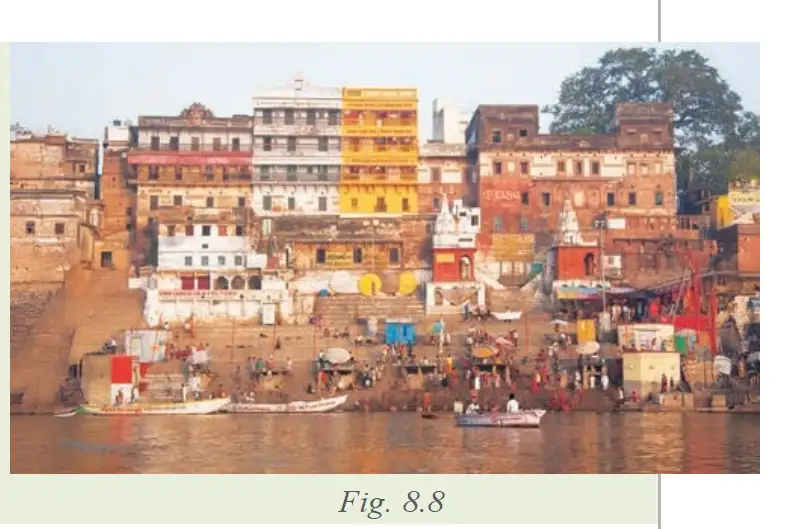
Rivers and river confluences
- Sangam
- The confluence, or meeting point, of rivers.
- Nadistuti Sukta
- A hymn in the Rigveda praising rivers; it invokes 19 major rivers of ancient northwest India.
- Kumbh Mela
- A major sacred bathing festival associated with four pilgrimage places.
Rivers as sacred lifelines
- Worship: Rivers have been worshipped in India since Vedic times.
- Ritual invocation: A traditional prayer calls upon Ganga, Yamuna, Godavari, Sarasvati, Narmada, Sindhu and Kaveri to be present in water.
- Sacred geography: River sources, tributaries and the places rivers flow through are also regarded as sacred and visited by pilgrims.
- Respectful names: Rivers are addressed with honorifics in local languages, such as “Ganga ji” and “Yamuna ji”.
- Lifelines: Rivers have sustained Indian civilisation.
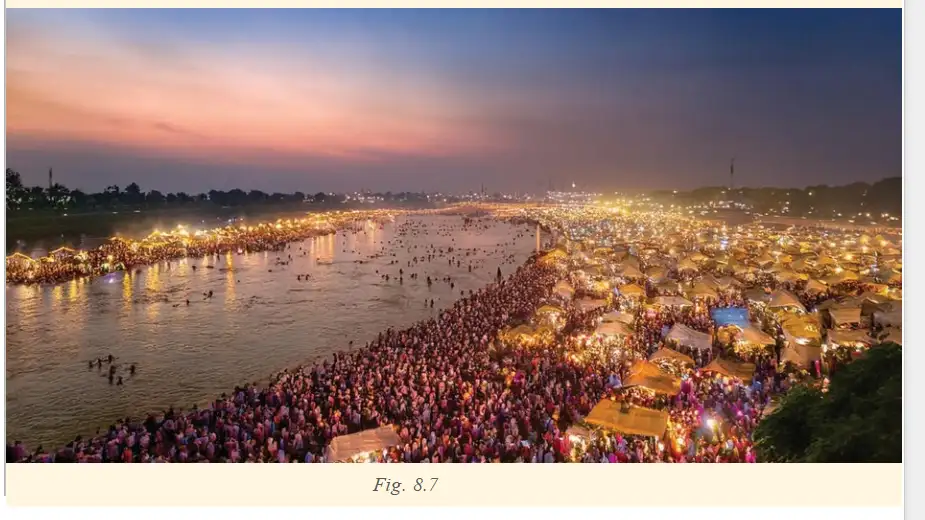
Prayagraj and the Kumbh Mela
- Prayag Sangam: Prayagraj lies at the confluence of the Ganga, Yamuna and the invisible Sarasvati.
- Festival cycle: Prayagraj hosts the Kumbh Mela every six years.
- Heritage: UNESCO has listed the Kumbh Mela as an intangible heritage of the world.
- 2025 attendance: An estimated 660 million people participated in the Kumbh Mela.
The Kumbh Mela legend
Amrita manthana legend
- Devas and asuras joined forces to churn the cosmic ocean and obtain amrita, the nectar of immortality.
- Vishnu as Mohini took the pitcher (kumbha) of nectar to keep it from the asuras.
- Drops fell at Haridwar, Prayagraj, Nashik and Ujjain.
- Kumbh Mela is held at these four places; bathing in their rivers during the prescribed period is considered especially auspicious.
Four Kumbh places
Remember H-P-N-U: Haridwar, Prayagraj, Nashik and Ujjain.
How does sacred ecology encourage the protection of nature?
Name the four Kumbh Mela places and explain why they are sacred.
Quick recap
- Tirthas often occur beside water, in forests or on mountains; sacred landscapes are called punyakshetras.
- Sacred ecology joins nature, culture and spirituality and supports the preservation of nature.
- Rivers have been worshipped since Vedic times; the Rigveda’s Nadistuti Sukta praises 19 rivers.
- Prayagraj’s Sangam is the meeting of the Ganga, Yamuna and invisible Sarasvati.
- The Kumbh Mela is linked to the amrita legend and is held at Haridwar, Prayagraj, Nashik and Ujjain.
- A dip in the rivers at the Kumbh sites during the prescribed period is considered auspicious.
Mountains and Forests
Sacred Mountains
Why mountains become sacred
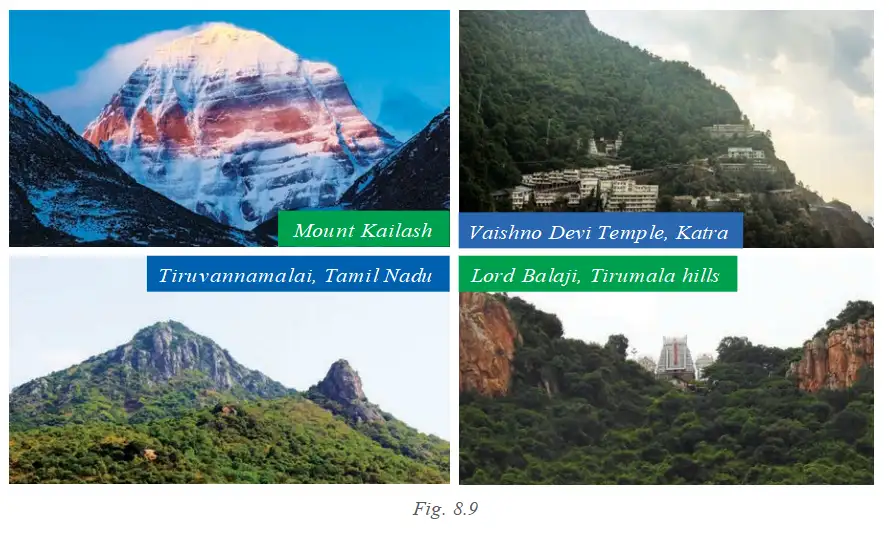
- Worldwide associations: Mountains are often linked with legends, deities or heroes.
- Symbolism: Their great height makes mountains seem like a gateway between Earth and heaven, bringing people closer to the divine.
- Pilgrimage: Hilltop temples and tirthas turn the difficult climb into a symbolic journey towards the divine.
- Pilgrim’s effort: Mountain trails tested both physical ability and mental strength; roads and other transport now make many sites easier to reach.
Trees, Forests and Sacred Groves
The sacred peepul
- Offerings: In many parts of India, trees are decorated with offerings such as turmeric and kumkum.
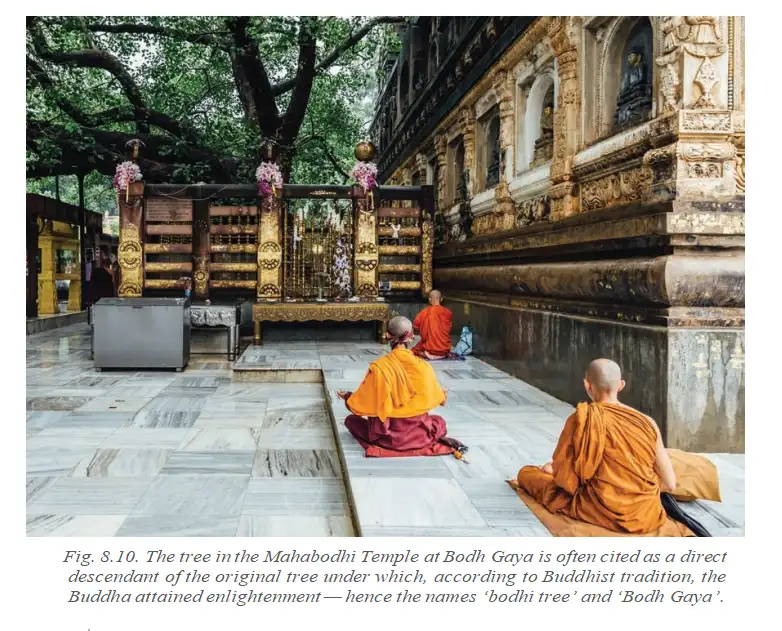
- Names: The peepul is also called pipal, bo tree or bodhi tree; its Sanskrit name is ashvattha.
- Sacred significance: It is sacred in Hinduism, Buddhism, Sikhism and Jainism.
- Botanical name: The peepul is *Ficus religiosa*, meaning the sacred or religious fig tree.
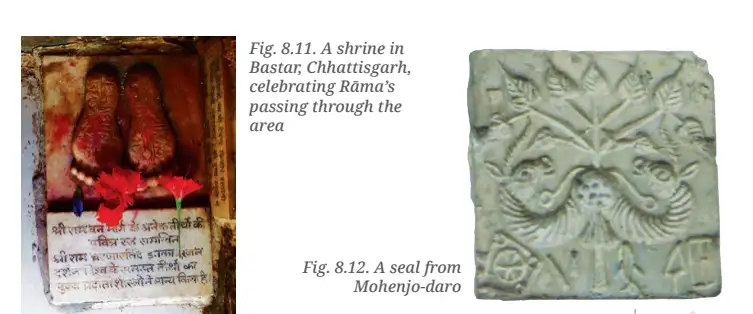
- Cultural presence: Peepul leaves appear on an ancient Mohenjo-daro seal, showing the tree’s importance in India’s cultural geography over millennia.
Epics and local traditions
- Epic landscapes: The Mahabharata and Ramayana describe pilgrimages and sacred rivers, forests and mountains.
- Local traditions: Rural and tribal communities in many regions tell that the epics’ heroes passed through their localities; shrines may mark these routes.
- Shared heritage: Such legends allow diverse communities to make the epics part of their own traditions.
Uses and ecological value of the peepul
- Medicinal uses: Leaves are used for some skin ailments, while bark is used for stomach ailments.
- Wildlife support: Because it stays green for most of the year, the tree provides food and shelter for birds and other animals.
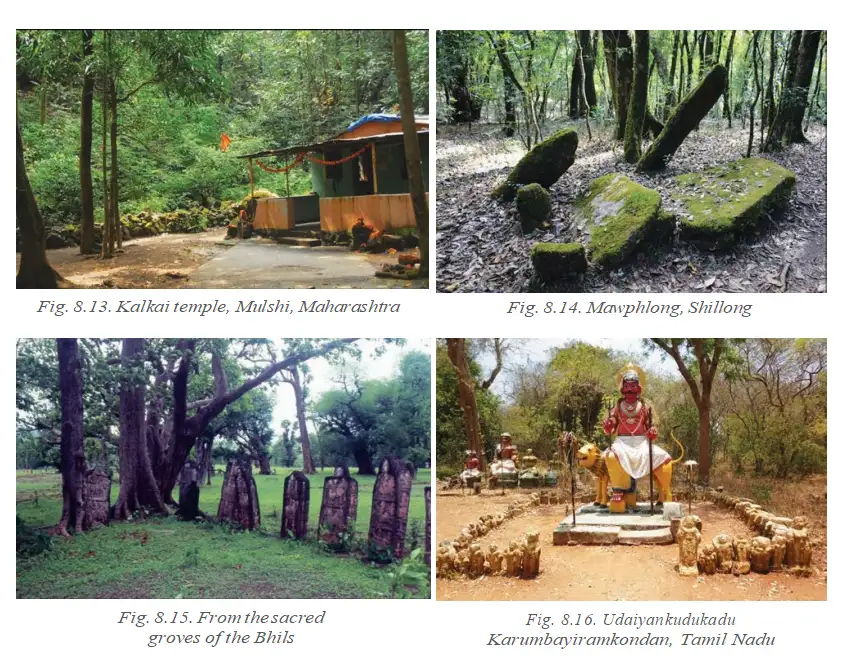
Sacred grove — A natural forest protected by a community because it is regarded as the abode of a deity.
Importance and changing condition of sacred groves
- Protection: Communities preserve groves from harmful activities such as hunting, tree felling and mining.
- Deities: Groves may be regarded as the abode of local deities, such as Ryngkew or Basa in Meghalaya.
- Biodiversity: Their sacred status helps protect many kinds of plants and animals.
- Water conservation: Many groves contain small water bodies and help conserve water.
- Threats: Groves have declined as land is encroached upon for uses including agriculture and industry, although many are still protected.
| Region or language | Name |
|---|---|
| Malayalam | kāvu |
| Tamil | kovilkāḍu |
| Kannada | devare kāḍu |
| Marathi | devarāī |
| Khasi (Meghalaya) | khlaw kyntang |
| Hindi (Himachal Pradesh) | dev van |
| Jharkhand | sarnā |
| Chhattisgarh | devgudi |
| Rajasthan | oraṇ |
Sacred groves, bats and ecological relationships
- Tamil Nadu example: A chronicle from Thanjavur District describes a grove deity protecting fruit bats, which are considered sacred; seeing one is regarded as auspicious.
- Ecological role of bats: Fruit bats help pollinate flowers and disperse seeds.
- Interdependence: Sacred-grove traditions connect the deity, humans and the ecosystem in a harmonious relationship.
- Tirtha
- A sacred place of pilgrimage.
- Cultural geography
- The ways culture and traditions shape the meaning of places and landscapes.
- Biodiversity
- The variety of living organisms in an area.
- Pollination
- The transfer of pollen that helps plants reproduce.
- Seed dispersal
- The movement of seeds away from the parent plant.
Why are mountains often regarded as sacred?
How do sacred groves benefit nature and people?
Quick recap
- Mountains are associated with legends, deities and heroes; their height can symbolize a route from Earth to heaven.
- A pilgrimage climb to a hilltop shrine represents a journey towards the divine.
- The peepul, or Ficus religiosa, is sacred in Hinduism, Buddhism, Sikhism and Jainism and has cultural, medicinal and ecological importance.
- Local traditions connect the Mahabharata and Ramayana to places across India.
- Sacred groves are community-protected forests, often regarded as the homes of deities.
- Groves support biodiversity and water conservation, but encroachment threatens them.
- Fruit bats in a Thanjavur grove tradition illustrate how sacred beliefs can support ecological relationships.
From Pilgrimage to Trade
Pilgrimage routes and trade routes
How pilgrimage and trade connected
- Mutual benefit: Pilgrims needed goods that traders could supply; traders gained customers along the way.
- Overlapping routes: Pilgrimage routes and trade routes often followed the same paths.
- Dual role: Some traders also visited sacred sites while carrying goods to distant towns and cities.
Ancient Indian trade routes
| Route | Path / connection |
|---|---|
| Uttarapatha | Connected the northwestern and eastern parts of the Subcontinent. |
| Dakṣiṇapatha | Ran from Kaushambi through Ujjayini (Ujjain) to Pratiṣṭhāna (Paithan). |
Goods traded
- Examples: Shells, pearls, coins, gold, diamonds, cotton, spices and sandalwood were traded along these routes.
Why routes overlapped
- Pilgrims travelled to sacred sites → they needed supplies → traders carried goods along these paths → pilgrimage and trade routes often overlapped.
Sacred geography beyond India
| Culture / place | Connection to sacred geography |
|---|---|
| Ancient Greece | Sacred landmarks included mountains and sacred groves. |
| Native Americans | Many communities shared a special bond with Nature, which they regarded as sacred. |
| Māori of New Zealand | The Māori regard Taranaki Maunga as their ancestor and as sacred. A law granted the mountain the rights and responsibilities of a human being, recognising the Māori worldview. |
Protecting sacred places
- Community voice: Elders can represent the voice of a threatened mountain or river.
- Purpose: Recognising this voice can help prevent sacred places from being exploited or degraded.
Restoring and conserving the sacred
Sacred geography under strain
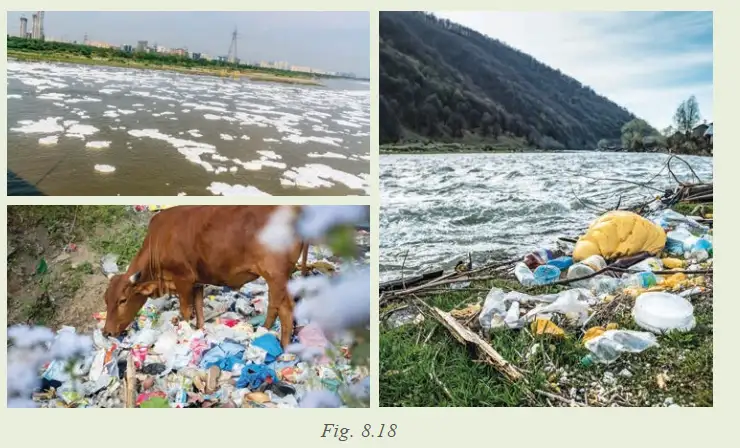
- Sacred rivers: The Yamuna in the north, Mahanadi in the east and Kaveri in the south are regarded as sacred, yet rivers and other sacred places can be polluted or degraded by human activity.
- Earlier relationship: A harmonious bond between people and sacred geography helped sustain Indian civilisation over millennia and created shared values across the Subcontinent.
- Current challenges: This relationship is under strain from pollution, overuse of rivers and development pressures on sacred mountains.
Why sacred geography matters today
- Nature is polluted or overexploited → rivers and sacred places are threatened → people speak up to protect the environment, deities and shared values → sacred geography can contribute to sustainability.
- Sacred geography
- The understanding of places in the natural or human world as sacred.
- Uttarapatha
- A major ancient trade route linking the northwestern and eastern parts of the Subcontinent.
- Dakṣiṇapatha
- An ancient trade route from Kaushambi through Ujjayini to Pratiṣṭhāna.
- Taranaki Maunga
- A mountain regarded by the Māori as their ancestor and as sacred.
Quick recap
- Pilgrims and traders benefited from one another, so their routes often overlapped.
- Uttarapatha connected the northwestern and eastern Subcontinent; Dakṣiṇapatha linked Kaushambi, Ujjayini and Pratiṣṭhāna.
- Ancient trade included shells, pearls, coins, gold, diamonds, cotton, spices and sandalwood.
- Sacred geography is found in cultures beyond India, including Māori, Native American and ancient Greek traditions.
- Pollution, overuse and development pressures threaten sacred places; communities can speak up to protect them.
- Sacred geography remains relevant to environmental protection and sustainability.
Before we move on
Sacred Places and Pilgrimage
Why Pilgrimage Matters
- Personal and spiritual: Pilgrimage supports individual development and spiritual growth.
- Social and economic: Pilgrimage encourages trade expansion.
- Cultural: Pilgrimage helps integrate diverse regions into a pan-Indian culture.
Protecting Sacred Heritage
- Pilgrimage
- A journey to a sacred place, often for spiritual purposes.
- Pan-Indian cultural integration
- Cultural connection and unity across regions of India.
- National heritage
- Places and traditions valued as part of the country's shared legacy.
Quick recap
- Sacred places exist across the landscapes of India’s religions.
- Buddhist, Jain and Sikh sacred places are often associated with great figures.
- Hindu pilgrimage sites form networks across India.
- Pilgrimage supports personal growth, trade and cultural integration.
- Many Hindu, tribal and folk traditions consider the land itself sacred.
- Neglect can pollute sacred places; protecting national heritage is a shared duty.
Social Science — ALL CHAPTERS
1
Geographical Diversity of India
2
Understanding the Weather
3
Climates of India
4
New Beginnings Cities and States
5
The Rise of Empires
6
The Age of Reorganisation
7
The Gupta Era: An Age of Tireless Creativity
8
How the Land Becomes Sacred
9
From the Rulers to the Ruled: Types of Governments
10
The Constitution of India - An Introduction
11
From Barter to Money
12
Understanding Markets
1
The Story of Indian Farming
2
India and Her Neighbours
3
Empires and Kingdoms: 6th to 10th Centuries
4
Turning Tides: 11th and 12th Centuries
5
India, a Home to Many
6
The State, the Government, and You
7
Infrastructure: Engine of India’s Development
8
Banks and the Magic of Finance