Class 10 . Social Science . Understanding Economic Development . Consumer Rights
Chapter 5: CONSUMER RIGHTS
Ch 5
Social Science
Class 10
Introduction & the Consumer in the Marketplace
The Consumer in the Marketplace
- Market participation: People take part in markets as producers and consumers.
- Consumers: They purchase and use final goods and services to meet their needs.
Why Consumers Need Protection
- Consumer position: Individual consumers often have less power than sellers and may struggle to obtain fair treatment.
- Protection: Rules and regulations, along with consumer action, help safeguard consumers’ interests in the marketplace.
Forms of Exploitation in the Market
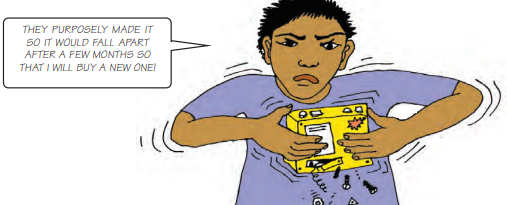
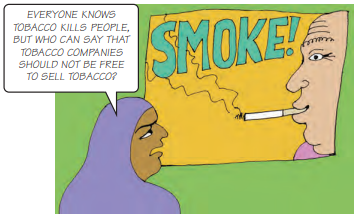
False Claims and the Need for Regulation
- Consumer
- A person who purchases and uses goods or services.
- Consumer movement
- An effort to change unfair treatment of consumers and support the enforcement of protective rules.
- Unfair trade practice
- A trading practice that treats consumers unfairly, such as short weighing or adding undisclosed charges.
- Adulterated goods
- Goods made impure or unsafe by adding inferior or harmful substances.
What are some ways consumers may be exploited in the marketplace?
Why are rules and regulations needed to protect consumers?
Quick recap
- People participate in markets as producers and consumers; consumers buy and use final goods and services.
- Individual consumers are often weaker than powerful sellers and companies.
- Exploitation can include short weight, undisclosed charges, adulterated or defective goods, and false claims.
- The consumer movement seeks to challenge unfair treatment and support the enforcement of rules.
- False claims about baby milk powder and cigarettes show why consumer-protection rules are necessary.
Consumer Movement
Why the Consumer Movement Emerged
Consumer movement — A social effort to protect and promote consumers’ interests against exploitation and unfair trade practices.
Changing responsibility for consumer protection
- Earlier: There was no legal system available to protect consumers from marketplace exploitation; dissatisfied consumers usually avoided a brand or shop.
- Common belief: Consumers were expected to be careful when buying goods and services.
- Change: Consumer organisations raised awareness and helped shift responsibility for quality towards sellers.
Growth of the consumer movement in India
- Food shortages, hoarding, black marketing and adulteration of food and edible oil created a need for consumer protection.
- These problems helped an organised consumer movement emerge in India in the 1960s.
- Till the 1970s, organisations mainly wrote articles, held exhibitions and formed groups to investigate ration-shop malpractice and overcrowding in road passenger transport.
- More recently, India has seen an upsurge in the number of consumer groups.
Key developments
- 1960sUnfair practices and shortages helped give rise to an organised consumer movement in India.
- Till the 1970sConsumer organisations mainly wrote articles, held exhibitions and formed groups to investigate malpractice.
- 1986The Indian government enacted the Consumer Protection Act, popularly known as COPRA.
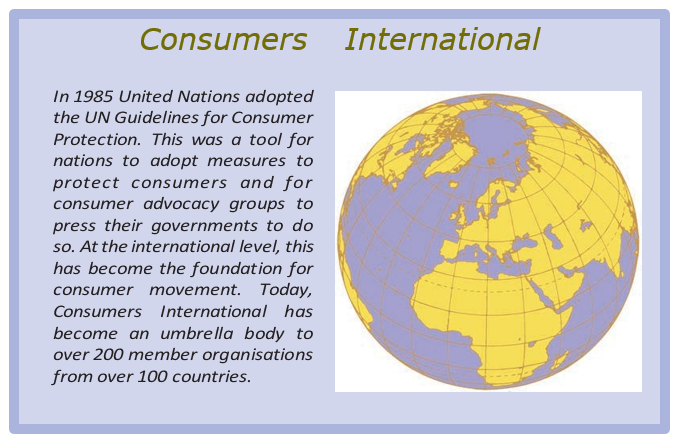
Impact and legal action
- Pressure: Consumer efforts pushed businesses and governments to correct conduct that was unfair or harmful to consumers.
- Major law: The Consumer Protection Act 1986 (COPRA) was an important step towards consumer protection.
The Right to Safety
Reji Mathew’s case: medical negligence
- Reji underwent tonsil removal under general anaesthesia at a private clinic in Kerala.
- Improper anaesthesia caused brain abnormalities and left him crippled for life.
- His father sought Rs. 5,00,000 compensation from the State Consumer Disputes Redressal Commission; it dismissed the complaint, citing insufficient evidence.
- His father appealed to the National Consumer Disputes Redressal Commission in New Delhi.
- The National Commission held the hospital responsible for medical negligence and ordered it to pay compensation.
Right to safety — The consumer’s right to protection from goods and services that are hazardous to life or property.
What the right requires
- Producers: Must strictly follow safety rules and regulations and ensure goods and services meet required standards.
- Public oversight: Government or public action is needed to check that safety and quality requirements are maintained.
- Why risks persist: Weak supervision and a weak consumer movement can allow poor-quality or unsafe products to remain in the market.
- Example: A pressure cooker’s safety valve must be high quality; a defective valve can cause a serious accident.
- Unfair trade practices
- Business practices that exploit consumers or go against their interests.
- Hoarding
- Holding back goods from sale, often creating scarcity.
- Black marketing
- Selling goods illegally, often at excessive prices or outside authorised channels.
- Adulteration
- Making a product impure or unsafe by adding inferior or harmful substances.
- COPRA
- The Consumer Protection Act 1986, enacted as a major step in consumer protection.
Why did the organised consumer movement arise in India?
What is the right to safety, and who must help protect it?
What was the significance of COPRA?
Quick recap
- The consumer movement grew from dissatisfaction with sellers’ unfair practices and the absence of a legal system to protect consumers from marketplace exploitation.
- In India, shortages, hoarding, black marketing and adulteration helped organise the movement in the 1960s.
- Till the 1970s, consumer groups wrote articles, held exhibitions and investigated malpractice; their numbers later increased.
- Consumer efforts pressured businesses and governments to correct unfair conduct.
- The Consumer Protection Act 1986, or COPRA, was a major step in consumer protection.
- The right to safety protects consumers from goods and services hazardous to life or property.
- Producers must follow safety requirements, and effective public oversight helps maintain quality.
Information About Goods and Services
Right to Be Informed
Using product information
- Defective goods: if a product is defective within its expiry period, a consumer can ask for a replacement or compensation.
- Expiry date: without a printed expiry period, a manufacturer may try to avoid responsibility by blaming the shopkeeper.
- Expired medicines: selling them can lead to severe action against the seller.
- MRP: consumers may complain if charged more than the printed maximum retail price; they can also bargain for a price below it.
MRP (Maximum Retail Price) — The maximum price printed on a packaged product that a retailer may charge.
Right to Information and Government Services
RTI Act
- October 2005The Government of India enacted the Right to Information (RTI) Act.
Right to Choose
Abirami’s case: decision
- District Commission directed the institute to refund Rs. 28,000, recognising Abirami’s right to choose.
- State Commission upheld the refund order, fined the institute Rs. 25,000 for a frivolous appeal, and ordered Rs. 7,000 compensation plus Rs. 2,000 litigation costs.
- Further direction: institutions in the state were restrained from charging the entire course fee in advance in one payment; violation could invite penalties and imprisonment.
Right to Seek Redressal
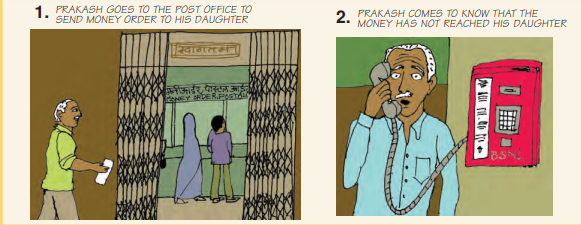
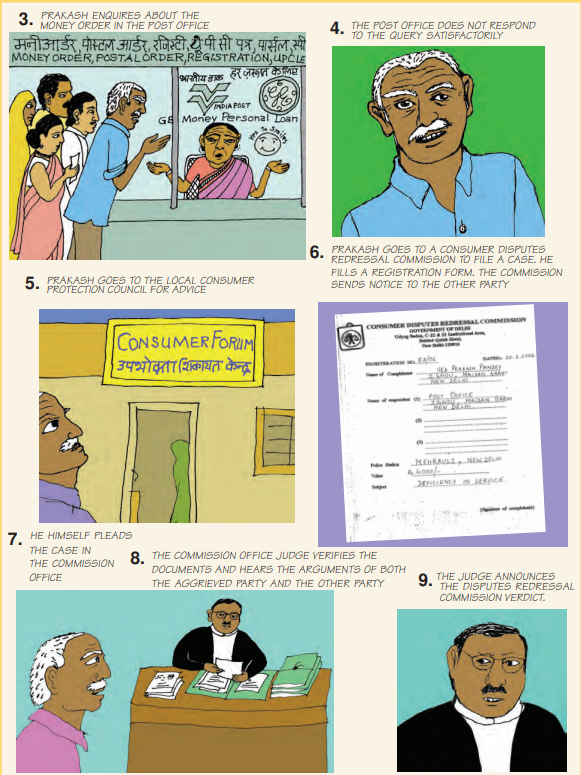
Consumer support organisations
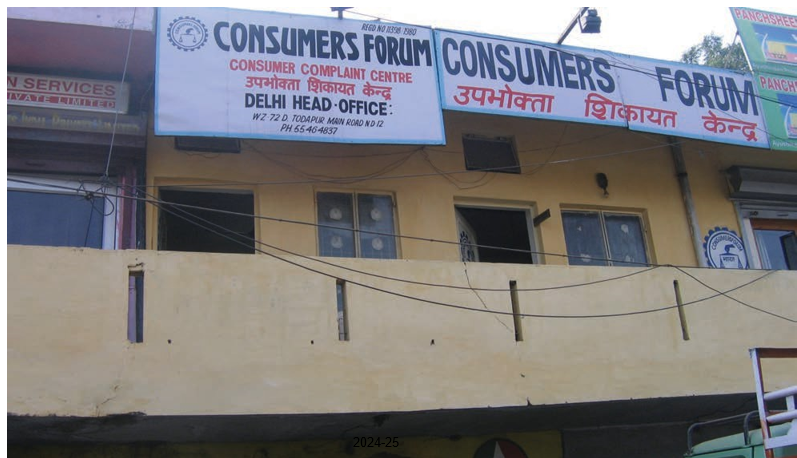
- Consumer forums and protection councils guide consumers in filing cases and may represent them before commissions.
- Government support helps voluntary consumer organisations create public awareness.
- Residents’ Welfare Associations may take up unfair-trade-practice cases on behalf of their members.
| Level | Commission | Claim amount |
|---|---|---|
| District | District Consumer Disputes Redressal Commission | Up to Rs. 1 crore |
| State | State Consumer Disputes Redressal Commission | Between Rs. 1 crore and Rs. 10 crore |
| National | National Commission | Exceeding Rs. 10 crore |
Appeal and defective-goods complaint
- A District Commission decision can be appealed to the State Commission, then to the National Commission.
- Arita buys a wall clock → discovers it is defective → complains to the dealer and branch office without success.
- She files a case → engages a professional → attends proceedings and produces the bill and warranty when asked → the dealer is ordered to replace the clock at no extra cost.
- RTI Act
- Law enacted in October 2005 that gives citizens access to information about government departments.
- Class action suit
- A consumer complaint filed by a group rather than only by an individual.
- COPRA
- The law under which a three-tier quasi-judicial system for consumer-dispute redressal was set up.
- Consumer Disputes Redressal Commission
- A consumer forum at district, state or national level that hears consumer complaints.
How does product information protect consumers?
What does the right to choose protect consumers from?
Name the three levels of the consumer redressal system and their claim limits.
Quick recap
- Labels provide details such as ingredients, price, dates, batch number and manufacturer information.
- The right to be informed supports complaints about defective goods, expired medicines and overcharging above MRP.
- The RTI Act, enacted in October 2005, lets citizens ask for information about government functions.
- The right to choose prevents forced purchases and protects a consumer’s choice to discontinue a service.
- Consumers can seek redressal, including compensation, through commissions and consumer-support organisations.
- COPRA provides district, state and national commissions, with appeals possible from district to state and national levels.
Learning to Become Well-informed Consumers
Becoming a Well-Informed Consumer
Well-informed consumer — A consumer who knows their rights and checks relevant product and service information before making a choice.
- Awareness: Knowing consumer rights helps people compare goods and services and make informed choices.
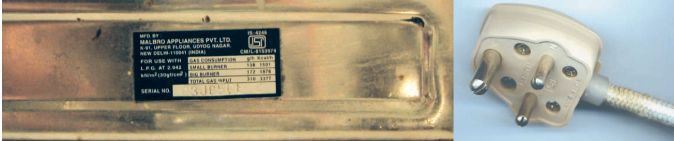
- Knowledge and skill: Consumers need to identify product information, quality marks and available legal remedies.
- Government information: COPRA led to separate Departments of Consumer Affairs in central and state governments. They spread information about consumer rights and legal processes through campaigns and advertisements.
| What to check | Why it matters |
|---|---|
| Quality marks such as ISI, Agmark and the +F fortification mark | Help consumers identify products with relevant quality or certification marks. |
| Product and manufacturer details | Help consumers identify the product and check the information provided by its manufacturer. |

Consumer Rights Under COPRA
Consumer Protection Act (COPRA), 1986 — The Act recognises six rights that every consumer in India should possess.
| Right | Meaning |
|---|---|
| Right to choice | Consumers should have access to a choice of goods and services. |
| Right to information | Consumers should receive relevant information about goods and services. |
| Right to redressal | Consumers can seek a remedy for grievances involving unfair practices or defective goods and services. |
| Right to representation | Consumers can have their interests represented before appropriate bodies. |
| Right to safety | Consumers should be protected from goods and services that may cause harm. |
| Right to consumer education | Consumers should be able to learn about their rights and how to use them. |
Taking the Consumer Movement Forward
Key Dates
- 1986The Indian Parliament enacted the Consumer Protection Act (COPRA).
- 24 DecemberObserved annually in India as National Consumers’ Day; it is the date COPRA was enacted.
- 2019COPRA was amended to further strengthen consumer protection.
Consumer Groups and Redressal
- Consumer groups: India has more than 2,000 consumer groups; about 50–60 are well organised and recognised for their work.
- Redressal system: India is among the countries with exclusive authority for consumer redressal.
- Challenges: The complaint process can be cumbersome, expensive and time-consuming. Consumers may need lawyers and must spend time filing cases and attending proceedings.
- Evidence: Cash memos are often not issued, making proof of purchase difficult; many market transactions are small retail sales.
| Change | Effect |
|---|---|
| Online purchases included | Consumer protection applies to purchases made through the internet. |
| Responsibility for defective products or deficient services | Service providers or manufacturers can be held responsible and may be penalised or imprisoned. |
| Mediation encouraged | A neutral mediator can help settle disputes outside the commissions at all three tiers. |
Continuing Challenges and Consumer Participation
- Awareness: Consumer awareness is spreading in India, but slowly.
- Enforcement: Laws protecting workers, especially in unorganised sectors, are weakly enforced; market rules and regulations are often not followed.
- Participation: Consumer movements become effective through consumers’ active involvement, voluntary effort and collective struggle.
How do quality marks and product information help consumers?
State two difficulties consumers face when seeking redressal.
How did the 2019 amendment strengthen consumer protection?
Quick recap
- Knowing consumer rights and product details supports informed choices.
- COPRA led to separate Departments of Consumer Affairs in central and state governments.
- COPRA recognises six rights, including the rights to safety, information and redressal.
- India observes 24 December as National Consumers’ Day and has exclusive authority for consumer redressal.
- The 2019 amendment included online purchases, clarified liability and encouraged mediation.
- Consumer redressal can be slow and costly, so active consumer participation remains important.
Social Science — ALL CHAPTERS
1
RESOURCES AND DEVELOPMENT
2
FOREST AND WILDLIFE RESOURCES
3
WATER RESOURCES
4
AGRICULTURE
5
MINERALS AND ENERGY RESOURCES
6
MANUFACTURING INDUSTRIES
7
LIFELINES OF NATIONAL ECONOMY
1
POWER SHARING
2
FEDERALISM
3
GENDER, RELIGION AND CASTE
4
POLITICAL PARTIES
5
OUTCOMES OF DEMOCRACY
1
THE RISE OF NATIONALISM IN EUROPE
2
NATIONALISM IN INDIA
3
THE MAKING OF A GLOBAL WORLD
4
THE AGE OF INDUSTRIALISATION
5
PRINT CULTURE AND THE MODERN WORLD
1
DEVELOPMENT
2
SECTORS OF THE INDIAN ECONOMY
3
MONEY AND CREDIT
4
GLOBALISATION AND THE INDIAN ECONOMY
5
CONSUMER RIGHTS