Class 10 . Social Science . India And Contemporary World II . Nationalism in India
Chapter 2: NATIONALISM IN INDIA
Ch 2
Social Science
Class 10
Introduction & the First World War, Khilafat and Non-cooperation
Nationalism and the Anti-Colonial Struggle
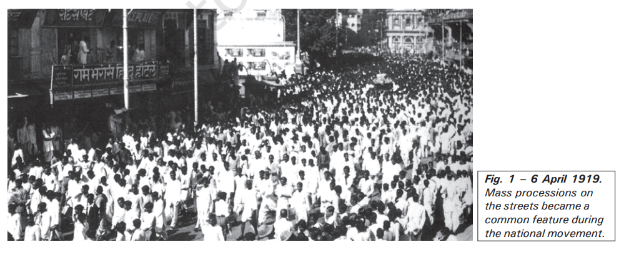
The First World War and Its Effects
War-Time Hardship and Public Anger
- First World War → higher defence spending and taxes
- Higher taxes, rising prices and forced recruitment → hardship and resentment
- Crop failures and influenza → food shortages and mass deaths
- Continuing hardship after the war → growing support for anti-colonial protest
The Idea of Satyagraha
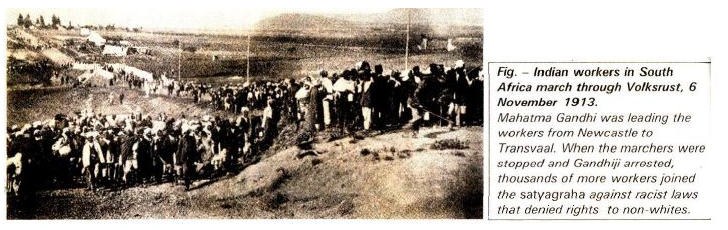
The Rowlatt Act and Satyagraha
- Rowlatt Act: Passed in 1919 despite Indian members’ opposition, it allowed detention without trial for up to two years.
- Satyagraha: Gandhi called for non-violent civil disobedience against the Act, beginning with a nationwide hartal on 6 April 1919.
Jallianwalla Bagh and the Response
Rowlatt Satyagraha: Events and Outcome
- Rowlatt Act restricted civil liberties → Gandhi called for a nationwide hartal and non-violent civil disobedience
- Mass protests → colonial authorities arrested leaders and imposed martial law in Amritsar
- Jallianwalla Bagh firing and harsh repression → protests and violence spread
- Violence increased → Gandhi called off the satyagraha
The Khilafat Issue and Non-Cooperation
From Khilafat Concern to Non-Cooperation
- Ottoman Turkey’s defeat → concern about the future powers of the Khalifa
- Concern among Indian Muslims → Khilafat Committee formed in Bombay
- Gandhi and the Ali brothers discuss united action → opportunity for Hindu–Muslim cooperation
- Congress accepts a wider struggle → non-cooperation planned for Khilafat and swaraj
Key Dates
- 1913Indian workers took part in Gandhi’s satyagraha against racist laws in South Africa.
- 1913–1918Prices doubled during the war years.
- 1918–19 and 1920–21Crop failures caused acute food shortages in many parts of India.
- 1919The Rowlatt Act was passed; Gandhi launched satyagraha against it.
- March 1919The Khilafat Committee was formed in Bombay.
- 6 April 1919A hartal was planned against the Rowlatt Act.
- 10 April 1919Police fired on a peaceful procession in Amritsar.
- 13 April 1919The Jallianwalla Bagh massacre took place.
- September 1920At the Calcutta Congress session, leaders agreed to begin non-cooperation for Khilafat and swaraj.
- 1921The census recorded 12–13 million deaths from famine and influenza.
- Satyagraha
- A form of active resistance associated with Mahatma Gandhi.
- Hartal
- A protest shutdown involving the closing of shops and often a halt to work.
- Khilafat
- The movement to defend the powers of the Ottoman Khalifa after Turkey’s defeat.
- Swaraj
- Self-rule.
Why did Gandhi support the Khilafat issue?
What did the Rowlatt Act allow the colonial government to do?
Quick recap
- National unity: Anti-colonial struggle created a shared bond, although groups had different experiences and aims.
- War hardship: Higher taxes, doubled prices, forced recruitment, crop failures and influenza intensified public anger.
- Satyagraha: Gandhi’s method was described as active resistance.
- Rowlatt Act: The law enabled detention without trial for two years; protests and repression culminated in the Jallianwalla Bagh massacre.
- Withdrawal: Gandhi called off the Rowlatt satyagraha when violence spread.
- Khilafat and swaraj: Gandhi supported Khilafat as a means of uniting communities; Congress backed non-cooperation in September 1920.
Why Non-cooperation? & Differing Strands Within the Movement
Why Non-Cooperation?
Gandhi’s argument and proposed programme
- Gandhi’s argument: In *Hind Swaraj* (1909), Gandhi said British rule depended on Indians’ cooperation. If Indians withdrew it, British rule would collapse within a year and swaraj would come.
- Stages: First surrender government-awarded titles and boycott British institutions and foreign goods; if the government used repression, launch full civil disobedience.
- Boycott targets: Civil services, army, police, courts, legislative councils, schools and foreign goods.
- Mobilisation: Gandhi and Shaukat Ali toured widely in summer 1920 to build popular support.
Boycott — Refusing to deal with, participate in, or buy and use something as a form of protest.
Building agreement in Congress
- Summer 1920Gandhi and Shaukat Ali toured to mobilise support.
- September–December 1920Congress debated the programme; some opposed boycotting the November council elections and feared popular violence.
- December 1920A compromise at the Nagpur Congress session led to adoption of the Non-Cooperation programme.
- January 1921The Non-Cooperation-Khilafat Movement began.
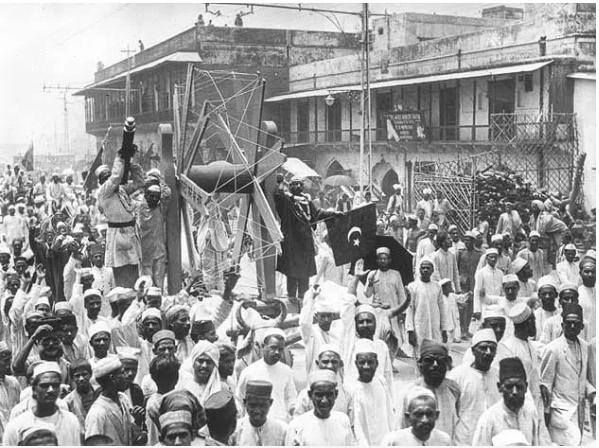
Differing Strands within the Movement
Different groups, different meanings of swaraj
- Shared call: Diverse social groups joined the movement, but each brought its own aspirations and understanding of swaraj.
- Foreign cloth: It symbolised Western economic and cultural domination; boycotting it became a visible protest.
The Movement in the Towns
Urban participation and its effects
- Middle classes: Thousands of students left government schools and colleges; headmasters and teachers resigned; lawyers gave up legal practice.
- Council elections: Boycotted in most provinces. In Madras, the Justice Party, representing non-Brahmans, contested because council entry offered a route to power usually held by Brahmans.
- Economic boycott: Foreign goods were rejected, liquor shops picketed and foreign cloth burned in bonfires; some merchants refused foreign trade and its financing.
- Indian textiles: As people switched to Indian clothes, production in Indian mills and handlooms rose.
- Imports: Foreign cloth imports halved in value, from Rs. 102 crore in 1921 to Rs. 57 crore in 1922.
Picket — A protest in which demonstrators block the entrance to a shop, factory or office.
Why urban non-cooperation slowed
- Khadi was costlier than mass-produced mill cloth → poor people could not afford it → a long boycott of mill cloth became difficult.
- British schools and courts were boycotted → Indian alternatives were needed → these institutions developed slowly → students, teachers and lawyers returned to British institutions.
Rebellion in the Countryside
Peasant movement in Awadh
- Leadership: Baba Ramchandra, a sanyasi and former indentured labourer in Fiji, led peasants against talukdars and landlords.
- Grievances: High rents and cesses, forced unpaid labour (begar), and insecure tenancy with frequent eviction.
- Demands: Reduce revenue, end begar and socially boycott oppressive landlords. Panchayats organised nai-dhobi bandhs, withholding barber and washerman services.
- Organisation: Jawaharlal Nehru visited Awadh villages in June 1920 to hear grievances. The Oudh Kisan Sabha was formed in October under Nehru, Baba Ramchandra and others; over 300 village branches followed within a month.
- Congress and local action: Congress sought to connect the peasant struggle to the wider movement, but peasant actions sometimes went beyond what Congress leaders accepted.
- Escalation: In 1921, peasants attacked talukdar and merchant houses, looted bazaars and seized grain. Some local leaders claimed Gandhi had ordered taxes to be withheld and land redistributed.
Begar — Forced labour that villagers had to provide without payment.
Awadh and Bardoli
- June 1920Jawaharlal Nehru began visiting Awadh villages and speaking with peasants.
- October 1920The Oudh Kisan Sabha was established; more than 300 branches formed within a month.
- 6 January 1921Police fired on peasants near Rae Bareli in the United Provinces. Nehru later recalled that the peasants remained calmer than he did and listened to his appeal for non-violence.
- 1928Vallabhbhai Patel led the successful Bardoli Satyagraha against increased land revenue; it gained wide publicity and public sympathy.
Tribal Peasants in the Gudem Hills
The Gudem rebellion
- Colonial restrictions closed forests to grazing and collecting fuelwood and fruit → hill people lost livelihoods and traditional rights.
- The government imposed begar for road building → hill people revolted.
- Alluri Sitaram Raju led the rebels; he claimed special powers and was regarded by them as an incarnation of God.
- Raju praised Gandhi and encouraged khadi and giving up drinking, but argued that freedom required force, not non-violence.
- Rebels attacked police stations, targeted British officials and waged guerrilla warfare → Raju was captured and executed in 1924, later becoming a folk hero.
Swaraj in the Plantations
Tea plantation workers in Assam
- Meaning of freedom: Workers wanted to move freely beyond the plantations and keep links with their home villages.
- Restriction: The Inland Emigration Act of 1859 barred workers from leaving tea gardens without permission, which was rarely granted.
- Response: Thousands left plantations after hearing of Non-Cooperation, believing Gandhi Raj was coming and they would receive land in their villages.
- Outcome: A railway and steamer strike stranded them before they reached home; police caught and brutally beat them.
| Group | Meaning or aspiration |
|---|---|
| Urban participants | Boycott colonial institutions and foreign goods; build Indian alternatives and industries. |
| Awadh peasants | Reduce revenue, abolish begar and socially boycott oppressive landlords. |
| Gudem hill people | Restore forest access and traditional rights; some believed force was necessary for freedom. |
| Assam plantation workers | Leave the plantations freely and return to their home villages, with hopes of receiving land. |
Local struggles and the national movement
- Beyond Congress’s programme: Local groups imagined swaraj as the end of their own suffering, and their actions did not always follow Congress’s plans.
- Wider identification: Invoking Gandhi’s name and linking local struggles to Congress connected people emotionally to an all-India movement beyond their locality.
Chauri Chaura and the movement’s withdrawal
- 1922A peaceful bazaar demonstration at Chauri Chaura, Gorakhpur, turned into a violent clash with police. Gandhi halted the Non-Cooperation Movement.
- Swaraj
- Self-rule; different social groups associated it with their own aspirations and the end of suffering.
- Boycott
- Refusal to deal with, participate in, or buy and use something as a form of protest.
- Picket
- A protest that blocks the entrance to a shop, factory or office.
- Begar
- Forced labour provided without payment.
Why did non-cooperation lose momentum in towns?
How did different social groups understand swaraj?
Quick recap
- Gandhi argued that British rule depended on Indian cooperation; withdrawing it, he predicted, would bring swaraj within a year.
- Congress adopted the Non-Cooperation programme at Nagpur in December 1920 after debate and compromise.
- Urban boycotts reduced foreign cloth imports and boosted Indian textiles, but costly khadi and slow alternatives weakened participation.
- Awadh peasants demanded reduced revenue, an end to begar and a social boycott of oppressive landlords; the Oudh Kisan Sabha connected their struggle to wider nationalism.
- Gudem rebels combined admiration for Gandhi with armed resistance, while Assam plantation workers sought freedom to return home.
- Swaraj meant different things to different groups, and Gandhi halted Non-Cooperation after violence at Chauri Chaura in 1922.
Towards Civil Disobedience
After the Non-Cooperation Movement
Political debate after 1922
- February 1922: Gandhi withdrew the Non-Cooperation Movement because it was turning violent in places. He believed satyagrahis needed training before mass struggle.
- Council politics: C. R. Das and Motilal Nehru formed the Swaraj Party within Congress to oppose British policies in provincial councils and expose their limited democracy.
- Radical strategy: Jawaharlal Nehru and Subhas Chandra Bose favoured renewed mass agitation and complete independence.
Economic depression and rural distress
- Worldwide depression reduced demand for agricultural goods.
- Agricultural prices fell from 1926 and collapsed after 1930.
- Exports declined; peasants struggled to sell crops and pay revenue.
- By 1930, the countryside was in turmoil.
Simon Commission and Purna Swaraj
From the Simon Commission to independence
- Simon Commission: Appointed under Sir John Simon to review India’s constitutional system; it had no Indian members.
- 1928 protests: Congress, the Muslim League and other groups greeted it with “Go back Simon.” Lala Lajpat Rai was injured by police during a peaceful protest and later died from his injuries.
- October 1929: Viceroy Lord Irwin offered the vague prospect of dominion status at an unspecified future date and proposed a Round Table Conference.
- Lahore Congress, December 1929: Under Jawaharlal Nehru’s presidency, Congress adopted Purna Swaraj (complete independence) as its goal; radicals gained influence over constitutional moderates.
- 26 January 1930: Independence Day was observed with a pledge asserting Indians’ right to freedom and the fruits of their labour.
- Pledge and response: It also claimed the right to change or abolish an oppressive government. The celebrations drew little attention, so Gandhi sought to connect freedom with everyday concerns such as salt.
The Salt March and Civil Disobedience
Why salt became a national symbol
- Gandhi’s demands: On 31 January 1930, Gandhi sent Irwin a letter listing eleven demands. They addressed different classes and aimed to unite them in a common campaign.
- Salt tax: Salt was essential to rich and poor alike; the tax and government monopoly over its production represented the oppressive nature of British rule.
- Ultimatum: Gandhi said that unless the demands were met by 11 March, Congress would begin civil disobedience. Irwin was unwilling to negotiate.
Civil disobedience — Deliberately breaking colonial laws, as well as refusing cooperation, to protest British rule.
| Point | Non-Cooperation | Civil Disobedience |
|---|---|---|
| Main action | Refuse to cooperate with British institutions and goods. | Refuse cooperation and deliberately break colonial laws. |
| Examples | Boycott institutions and foreign goods. | Break the salt law; refuse taxes or violate forest laws. |
The Dandi March
- Gandhi set out from Sabarmati with 78 trusted volunteers.
- They walked over 240 miles to Dandi in 24 days, averaging about 10 miles a day.
- Thousands came to hear Gandhi along the route; he explained swaraj and urged peaceful resistance.
- On 6 April 1930, Gandhi reached Dandi and broke the salt law by making salt from seawater.

Spread of the movement and government repression
- Protests: People made salt, demonstrated outside government salt factories, boycotted foreign cloth and picketed liquor shops.
- Rural action: Peasants refused revenue and chaukidari taxes; some village officials resigned, while forest communities entered Reserved Forests to collect wood and graze cattle.
- Peshawar: After Abdul Ghaffar Khan was arrested in April 1930, crowds demonstrated and faced armoured cars and police firing; many were killed.
- Sholapur: After Gandhi’s arrest, industrial workers attacked police posts, municipal buildings, law courts and railway stations—symbols of British rule.
- Repression: The government attacked peaceful satyagrahis, including women and children, and arrested about 100,000 people.
How Different Groups Saw the Movement
| Group | Why they joined / their idea of Swaraj | Limits or response |
|---|---|---|
| Rich peasants: Patidars of Gujarat; Jats of Uttar Pradesh | Falling prices reduced cash income, making high revenue difficult to pay; Swaraj meant lower revenue. | They organised communities and boycotts but were disappointed when revenue rates were not revised in 1931; many stayed away when the movement restarted in 1932. |
| Poor peasants and small tenants | Falling incomes made rent to landlords difficult to pay; they wanted unpaid rent remitted. | Some joined radical movements led by Socialists and Communists. Congress generally avoided no-rent campaigns to avoid alienating rich peasants and landlords. |
| Business classes | Wanted protection from foreign imports and a rupee-sterling exchange ratio that discouraged imports; Swaraj meant freedom from colonial business restrictions. | Industrialists supported the first phase with funds and boycotts of imported goods, but later feared militant activity, disruption and socialism. |
| Industrial workers | Some adopted foreign-goods boycotts and joined protests over low wages and poor working conditions. | Participation was limited except in the Nagpur region; Congress avoided workers’ demands to retain industrialist support. |
| Women | Many entered public processions and political action for the first time. | Women of different ages, including mothers carrying children, joined marches. |
Business and worker organisations / actions
- Business organisations: Indian Industrial and Commercial Congress was formed in 1920; FICCI followed in 1927. Prominent industrialists included Purshottamdas Thakurdas and G. D. Birla.
- Worker actions: Railway workers struck in 1930 and dockworkers in 1932. In 1930, Chotanagpur tin-mine workers wore Gandhi caps and joined rallies and boycott campaigns.
Revolutionary nationalism: HSRA
- HSRA: The Hindustan Socialist Republican Army was founded in 1928 at Ferozeshah Kotla, Delhi; its leaders included Bhagat Singh, Jatin Das and Ajoy Ghosh.
- Actions: Bhagat Singh and Batukeswar Dutta threw a bomb in the Legislative Assembly in April 1929; that year, an attempt was made to blow up Lord Irwin’s train.
- Aim: Bhagat Singh argued for social revolution, not glorification of bombs and pistols. He was executed by the colonial government at age 23.
The Movement After 1931
Pact, conference and renewed struggle
- 5 March 1931: Gandhi called off the movement and signed the Gandhi-Irwin Pact; Congress agreed to attend a Round Table Conference and the government agreed to release political prisoners.
- December 1931: Gandhi attended the Second Round Table Conference in London, but negotiations broke down.
- Back in India, Gandhi found renewed repression: Congress was illegal, Ghaffar Khan and Jawaharlal Nehru were jailed, and meetings, demonstrations and boycotts were restricted.
- Gandhi relaunched Civil Disobedience in 1932; it continued for over a year but had lost momentum by 1934.

Important dates
- 1918–19Distressed peasants in Uttar Pradesh were organised by Baba Ramchandra.
- April 1919Gandhian hartal against the Rowlatt Act; Jallianwala Bagh massacre.
- January 1921Non-Cooperation and Khilafat movements launched.
- February 1922Chauri Chaura; Gandhi withdrew the Non-Cooperation Movement.
- May 1924Alluri Sitarama Raju was arrested, ending a two-year armed tribal struggle.
- 1928The HSRA was founded; the Simon Commission arrived in India.
- December 1929Lahore Congress adopted the demand for Purna Swaraj.
- 26 January 1930Independence Day pledge for complete independence.
- March–April 1930Gandhi began the Civil Disobedience Movement by breaking the salt law at Dandi.
- 1930Ambedkar established the Depressed Classes Association.
- March 1931Gandhi-Irwin Pact; Gandhi called off the movement.
- December 1931Second Round Table Conference.
- 1932Civil Disobedience Movement relaunched.
- 1934The movement had lost momentum.
- Purna Swaraj
- Complete independence from British rule.
- Dominion status
- A proposed self-governing status within the British Empire.
- Chaukidari tax
- A village watchman tax that some protesters refused to pay.
- Reserved Forest
- A forest under colonial control, where local use was restricted.
- Round Table Conference
- A conference in London to discuss India’s future constitution.
Why did Gandhi choose salt as the central symbol of the Civil Disobedience Movement?
Why did rich peasants support the movement, and why did many later withdraw?
What did the Gandhi-Irwin Pact provide for?
Quick recap
- Gandhi withdrew Non-Cooperation in 1922; Congress debated council politics versus mass agitation.
- Depression-era price collapse and rural distress increased resentment over revenue demands.
- The Simon Commission’s lack of Indian members triggered protests; Lahore Congress adopted Purna Swaraj in 1929.
- Poorly attended Independence Day celebrations led Gandhi to connect complete freedom with everyday concerns such as salt.
- The Salt March from Sabarmati to Dandi began Civil Disobedience in 1930, with people breaking colonial laws and boycotting goods.
- Different social groups joined for distinct aims, so support for the movement was not uniform.
- The Gandhi-Irwin Pact led to a conference, but repression returned; the movement was relaunched in 1932 and faded by 1934.
The Limits of Civil Disobedience
Dalits and the Civil Disobedience Movement
Different approaches to ending untouchability
- Dalits: From around the 1930s, people formerly called “untouchables” increasingly used the term dalit, meaning oppressed.
- Congress and sanatanis: Congress had long ignored Dalit concerns, partly because it feared offending sanatanis, or conservative high-caste Hindus.
- Gandhi’s approach: Gandhi said swaraj could not be achieved while untouchability continued. He called Dalits harijans and organised satyagraha for access to temples and public facilities.
- Dignity of labour: Gandhi cleaned toilets to dignify the work of bhangis (sweepers) and urged upper castes to give up untouchability.
- Dalit leaders’ demands: Many sought reserved seats in educational institutions and separate electorates, believing political power could address social discrimination.
- Movement participation: Dalit involvement in Civil Disobedience was limited, especially in Maharashtra and Nagpur, where Dalit organisation was strong.
Ambedkar, Gandhi and the Poona Pact
- Dr B.R. Ambedkar organised Dalits through the Depressed Classes Association in 1930 and demanded separate electorates at the Second Round Table Conference.
- Gandhi’s objection: He feared separate electorates would hinder Dalit integration and began a fast unto death after the British accepted Ambedkar’s demand.
- Poona Pact (September 1932): Ambedkar accepted a compromise providing reserved seats for the Depressed Classes in provincial and central legislative councils.
- How seats were filled: Reserved representatives would be elected by the general electorate, not by a separate Dalit electorate.
- Later name: The Depressed Classes later came to be known as the Scheduled Castes.
- Continuing distrust: The Dalit movement remained wary of the Congress-led national movement.
Muslim Political Concerns
Growing distance between Hindus and Muslims
- The Non-Cooperation-Khilafat movement declined.
- Many Muslims felt alienated from Congress; from the mid-1920s, Congress appeared closer to Hindu Mahasabha and other Hindu nationalist groups.
- Hindu and Muslim religious processions became more militant, contributing to communal clashes and riots.
- Each riot deepened distrust between the communities.
- When Civil Disobedience began, many Muslims were reluctant to join a united struggle.
| Issue | Position or outcome |
|---|---|
| Representation | The main disagreement concerned how Muslims would be represented in future elected assemblies. |
| Jinnah’s proposal | Muhammad Ali Jinnah was willing to give up separate electorates if Muslims received reserved seats in the Central Assembly and representation proportional to population in Muslim-majority Bengal and Punjab. |
| Talks in 1928 | At the All Parties Conference, M.R. Jayakar of the Hindu Mahasabha opposed compromise, ending hopes of agreement. |
| Muslim fears | Many Muslim leaders feared that a Hindu-majority government could overwhelm minority culture and identity. |
Iqbal’s Case for Separate Electorates
Iqbal’s argument in 1930
- Sir Muhammad Iqbal, as Muslim League president, defended separate electorates as protection for Muslim political interests.
- Cultural autonomy: He argued that Indian Muslims should be able to develop their culture and traditions within India.
- Communal groups: Iqbal viewed India as a society of distinct religious communities, not simply territorial groups like those in Europe.
- Political safeguards: He cited Muslims’ economic disadvantage, debt and insecure provincial majorities as reasons for separate electorates.
- Later significance: His argument was later treated as an intellectual justification for the demand for Pakistan.
| Point | Iqbal’s view | Divisive meaning |
|---|---|---|
| Meaning | Communities should have room to develop their own identity while forming a harmonious whole. | Political loyalties organised around religious identity can deepen hostility and division between communities. |
| National unity | Unity should recognise and protect distinct communities. | Unity may be weakened when one community seeks dominance over others. |
- Separate electorate
- An arrangement in which a community elects its own representatives.
- Reserved seats
- Seats set aside for a community, though the electorate choosing representatives may be general.
- Communalism
- Political thinking that organises interests around religious communities; it may stress protection or encourage division.
- Poona Pact
- The September 1932 agreement giving the Depressed Classes reserved legislative seats elected by the general electorate.
Key Dates
- 1927Congress–Muslim League negotiations raised hopes of agreement on Muslim representation.
- 1928Compromise efforts at the All Parties Conference failed after M.R. Jayakar opposed them.
- 1930Ambedkar organised the Depressed Classes Association; Iqbal defended separate electorates as a safeguard for Muslim interests.
- September 1932The Poona Pact provided reserved seats for the Depressed Classes, elected by the general electorate.
What was the Poona Pact?
Why did many Muslims not join the Civil Disobedience Movement in large numbers?
Why did Iqbal support separate electorates?
Quick recap
- Dalit participation in Civil Disobedience was limited because many leaders prioritised political safeguards against social discrimination.
- Congress had neglected Dalit concerns partly to avoid offending sanatanis; Gandhi campaigned against untouchability and dignified bhangi work.
- The Poona Pact gave the Depressed Classes reserved seats elected by the general electorate; they later became known as the Scheduled Castes.
- Communal riots and Congress’s perceived links with Hindu nationalist groups increased Muslim alienation.
- Congress–League talks over representation failed in 1928.
- Iqbal argued that separate electorates and cultural autonomy could protect Muslim minority interests.
- The lecture shows how unresolved community-specific concerns limited united participation in the national movement.
The Sense of Collective Belonging
How Collective Belonging Developed
Collective belonging — The shared feeling that people from different communities, regions and language groups belong to one nation.
How a Shared National Identity Grew
- Shared struggles helped people recognise the unity that connected them.
- Cultural processes—history, fiction, folklore, songs, popular prints and symbols—helped nationalism capture people’s imagination.
- National images and symbols gave people a common way to identify with India.
Bharat Mata as a National Symbol
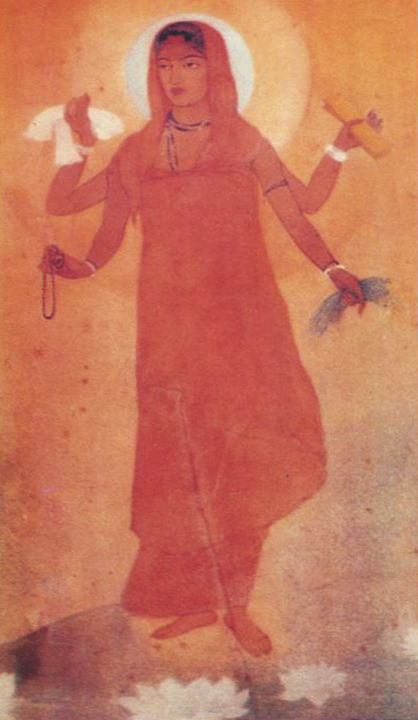
Bharat Mata — A personification of India as a mother figure, used to create an emotional image of the nation.
The Mother Figure and Its Meanings
- Bankim Chandra Chattopadhyay wrote ‘Vande Mataram’ in the 1870s as a hymn to the motherland; it later appeared in his novel *Anandamath* and was widely sung during the Swadeshi movement in Bengal.
- Abanindranath Tagore painted Bharat Mata in 1905, inspired by the Swadeshi movement. She is shown as calm, composed, spiritual and ascetic, dispensing learning, food and clothing; the mala emphasises her ascetic quality.
- Indian art: Abanindranath Tagore, like Ravi Varma before him, sought to develop a style of painting that could be seen as truly Indian.
- Nationalist meaning: Devotion to Bharat Mata came to be seen as evidence of nationalism. Popular prints also showed leaders offering their heads to the mother, making sacrifice for the motherland a powerful idea.
- Different depictions: Later images varied. One portrayal showed Bharat Mata with a trishul beside a lion and an elephant—symbols of power and authority.
Folklore and National Identity
Folk revival — The collection and preservation of folk traditions to recover cultural identity and pride in the past.
Collecting Folk Traditions
- Late nineteenth century nationalists recorded folk tales, songs and legends, sometimes travelling through villages to collect them.
- Purpose: They believed folk traditions preserved India’s authentic culture, damaged by outside influences, and could help restore national pride and identity.
- Rabindranath Tagore collected ballads, nursery rhymes and myths in Bengal and led the folk-revival movement.
- Natesa Sastri published the four-volume *The Folklore of Southern India*, a collection of Tamil folk tales. He regarded folklore as national literature and a trustworthy expression of people’s thoughts and character.
Flags and Other Unifying Symbols
Symbols of Unity and Resistance
- Religious institutions: Nationalist images sometimes framed leaders with sacred places of different faiths, such as temples, churches and mosques, to suggest unity.
- Nehru prints showed him holding Bharat Mata and a map of India close to his heart, linking the nation with the mother figure.
- Swadeshi flag: Designed during the Swadeshi movement in Bengal; its red, green and yellow colours included eight lotuses for the provinces of British India and a crescent moon representing Hindus and Muslims.
- Swaraj flag: By 1921, Gandhiji had designed a red, green and white tricolour with a spinning wheel at the centre, representing the Gandhian ideal of self-help.
- Defiance: Carrying the flag aloft during marches became a symbol of resistance to colonial rule.
Reinterpreting History—and Its Limits
Nationalist history — A reading of India’s past that highlighted earlier achievements to challenge colonial claims and inspire national pride.
A Glorious Past and the Problem of Exclusion
- Colonial view: The British described Indians as backward and primitive, and incapable of governing themselves.
- Nationalist response: Writers highlighted ancient achievements in art, architecture, science, mathematics, religion, culture, law, philosophy, crafts and trade.
- Historical narrative: Nationalist accounts presented a glorious past followed by decline under colonial rule, urging pride in past achievements and action to change conditions under British rule.
- Example: In *Bharatbarsher Itihas* (1858), Tarinicharan Chattopadhyay contrasted the qualities attributed to earlier Indians with India’s condition under British rule.
- Limitation: When the past being celebrated was Hindu and images drew on Hindu iconography, people from other communities could feel excluded.
Key Dates and Periods
- 1858Tarinicharan Chattopadhyay published *Bharatbarsher Itihas*, an example of writing that praised India’s past.
- 1870sBankim Chandra Chattopadhyay wrote ‘Vande Mataram’ as a hymn to the motherland.
- 1905Abanindranath Tagore painted Bharat Mata.
- By 1921Gandhiji had designed the Swaraj flag with a spinning wheel.
- First half of the twentieth centuryGrowing anger against colonial rule brought diverse groups and classes into a common struggle for freedom.
Unity, Diversity and the National Movement
A Nation with Many Voices
- Congress and Gandhi tried to channel people’s grievances into organised movements and forge national unity.
- Different aspirations: Groups and classes joined with varied grievances, so freedom from colonial rule meant different things to different people.
- Tensions: Congress tried to resolve differences and prevent one group’s demands from alienating another, but unity often broke down into conflict.
- Overall: The emerging nation included many voices seeking freedom from colonial rule.
- Collective belonging
- A shared feeling of belonging to the same nation.
- Bharat Mata
- The mother figure used to represent India.
- Folk revival
- Collecting and preserving folk traditions to strengthen cultural identity.
- Swaraj flag
- The tricolour designed by Gandhiji by 1921, with a spinning wheel symbolising self-help.
How did Bharat Mata become a symbol of Indian nationalism?
What did the Swadeshi and Swaraj flags represent?
Quick recap
- Shared struggles and cultural expression helped diverse people imagine themselves as one nation.
- Bharat Mata, ‘Vande Mataram’ and nationalist prints created emotional symbols of India.
- Folk revivalists collected traditions to preserve culture and build pride in the past.
- The Swadeshi and Swaraj flags used symbols to express unity, self-help and resistance.
- Nationalist histories celebrated past achievements, but Hindu-centred imagery could exclude other communities.
- Congress and Gandhi sought unity, but different grievances and expectations repeatedly produced tensions.
Social Science — ALL CHAPTERS
1
RESOURCES AND DEVELOPMENT
2
FOREST AND WILDLIFE RESOURCES
3
WATER RESOURCES
4
AGRICULTURE
5
MINERALS AND ENERGY RESOURCES
6
MANUFACTURING INDUSTRIES
7
LIFELINES OF NATIONAL ECONOMY
1
POWER SHARING
2
FEDERALISM
3
GENDER, RELIGION AND CASTE
4
POLITICAL PARTIES
5
OUTCOMES OF DEMOCRACY
1
THE RISE OF NATIONALISM IN EUROPE
2
NATIONALISM IN INDIA
3
THE MAKING OF A GLOBAL WORLD
4
THE AGE OF INDUSTRIALISATION
5
PRINT CULTURE AND THE MODERN WORLD
1
DEVELOPMENT
2
SECTORS OF THE INDIAN ECONOMY
3
MONEY AND CREDIT
4
GLOBALISATION AND THE INDIAN ECONOMY
5
CONSUMER RIGHTS