Class 10 . Social Science . Democratic Politics II . Political Parties
Chapter 4: POLITICAL PARTIES
Ch 4
Social Science
Class 10
Introduction
Political Parties in a Democracy
Roles and topics
- Democratic development: Political parties have contributed to the rise of democracies and the formation of constitutional designs.
- Electoral politics: Parties play a role in elections and in forming and running governments.
- Federalism: Parties act as vehicles for sharing political power across federal levels.
- Social divisions: Parties help negotiate social divisions within democratic politics.
- Key questions: Why are parties needed, and how many parties are suitable for a democracy?
- Chapter focus: The chapter examines national and regional parties in India, problems within parties, and possible reforms.
Quick recap
- Political parties have helped democracies develop and shaped constitutional designs.
- Parties take part in electoral politics and the formation and working of governments.
- Parties help share political power in a federal system.
- Parties negotiate social divisions in democratic politics.
- The chapter asks why parties are needed and how many parties suit democracy.
- It examines Indian national and regional parties, party problems, and possible reforms.
Why Do We Need Political Parties?
Political Parties in a Democracy
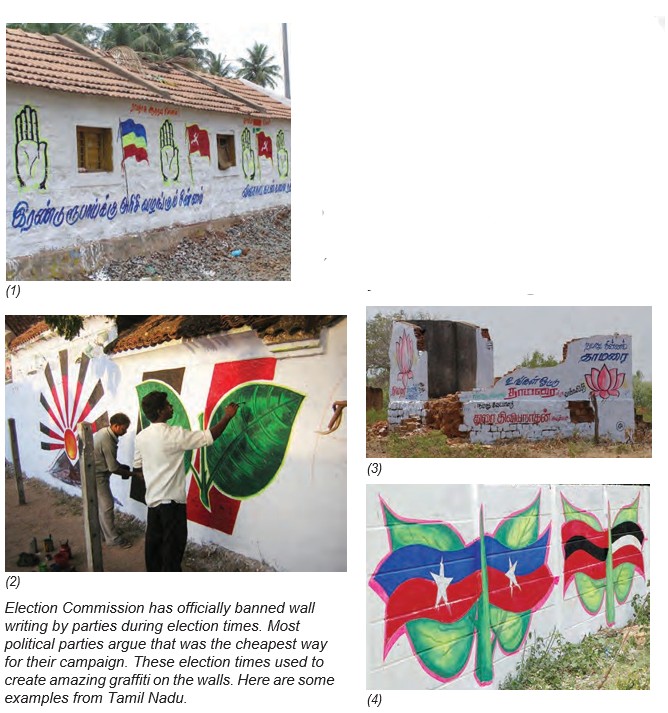
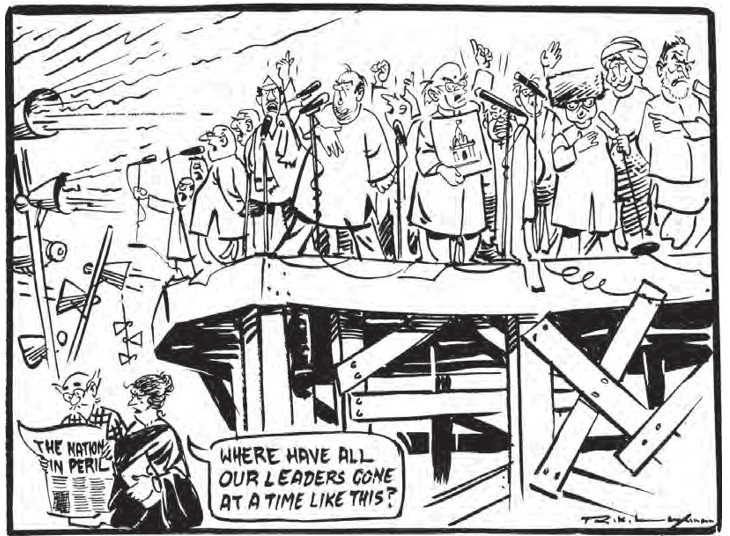
Meaning and Components
Political party — A group of people who agree on policies and programmes, contest elections, and seek to hold government power to promote what they consider the collective good.
How Parties Represent Society
- Policies: Parties try to persuade people that their policies are better and seek popular support through elections.
- Partisanship: A party represents a part of society, taking particular positions and upholding certain interests.
- Components: Every political party consists of leaders, active members, and followers.
| Component | Role |
|---|---|
| Leaders | Guide the party and make key decisions. |
| Active members | Work for the party and carry out its activities. |
| Followers | Support the party and its policies. |
Functions of Political Parties
Seven Main Functions
- 1. Contest elections: Parties nominate candidates. In the USA, party members and supporters choose candidates; in India, top party leaders generally select them.
- 2. Offer policies and programmes: Parties group many opinions into a few positions. Voters choose among them, and the ruling party guides government policy.
- 3. Help make laws: Laws are debated and passed in the legislature, but party members generally follow their party leadership’s direction.
- 4. Form and run governments: Parties recruit and train leaders, make them ministers, and use them to carry out policies.
- 5. Act as opposition: Parties that lose elections present different views, criticise government failures or wrong policies, and mobilise opposition.
- 6. Shape public opinion: Parties raise issues, organise movements and rallies, and influence debate. Some pressure groups are extensions of parties among different sections of society.
- 7. Connect people to government: Local party leaders can help citizens approach government machinery and access welfare schemes. Parties must respond to people’s needs or risk rejection in the next election.
Why Political Parties Are Necessary
What Happens Without Parties?
- Independent candidates: Without parties, each candidate would stand alone and could not make promises to people about major policy changes through a shared programme.
- Uncertain utility: A government might form, but its usefulness would remain uncertain; no group would be clearly responsible for how the country is run.
- Limited accountability: Representatives would answer for local matters to their constituencies, but responsibility for national governance would be unclear.
- Informal factions: Even non-party panchayat elections often split villages into factions, each putting forward a panel of candidates—much like parties.
Why Representative Democracies Need Parties
- Societies grow large and complex.
- Different views emerge on public issues.
- An agency is needed to gather views and bring representatives together.
- Parties help form responsible governments and make, support, or oppose policies.
- Therefore, political parties are a necessary condition for democracy.
- Partisanship
- Support for a particular side, party, or set of interests.
- Opposition
- Parties outside government that scrutinise and challenge the ruling party.
- Representative democracy
- A system in which people elect representatives to govern and make decisions on their behalf.
- Pressure group
- A group that seeks to influence public policy; some pressure groups are linked to political parties.
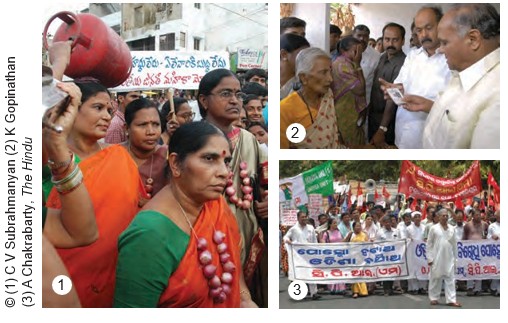
Examples of Party Functions
- Raise issues and mobilise people: BJP Mahila Morcha activists protested in Visakhapatnam against rising onion and LPG prices.
- Connect citizens to government support: A minister distributed Rs. 1 lakh cheques to families of hooch victims.
- Oppose government policy: Activists from CPI (M), CPI, OGP, and JD (S) rallied in Bhubaneswar against the State Government’s permission for POSCO to export iron ore from Orissa to feed steel plants in China and Korea.
State four functions of political parties.
Why are political parties necessary for representative democracy?
Quick recap
- A political party shares policies, contests elections, and seeks government power.
- Its three components are leaders, active members, and followers.
- Parties contest elections, shape policies and laws, run governments, and act as opposition.
- Parties influence public opinion and help people access government machinery and welfare schemes.
- Large, complex societies need parties to organise views and form responsible governments.
- Political parties are a necessary condition for representative democracy.
How Many Parties Should We Have?
How Many Parties Are Effective?
- Effective parties: Although many parties may be registered, usually only a handful are serious contenders for power.
- Party systems: Their form evolves with a country’s social and regional diversity, political history and electoral system; no single system suits every country.
Types of Party Systems
| Point | One-party system | Two-party system | Multiparty system |
|---|---|---|---|
| Competition for power | Only one party is allowed to rule. | Two main parties have a serious chance of forming the government. | More than two parties can gain power alone or through alliances. |
| Democratic character | Not democratic: other parties do not get free competition or a fair chance to rule. | Allows at least two parties to compete. | Allows several parties to compete. |
| Example | China: only the Communist Party is allowed to rule. | The United States and the United Kingdom. | India. |
Alliance or front — A group of parties that joins together to contest elections and seek power.
Multiparty Systems and Alliances
- Coalition government: In a multiparty system, several parties may come together to form the government.
- India in 2004: Three major alliances in the parliamentary elections were the National Democratic Alliance, the United Progressive Alliance and the Left Front.
- Strength: Multiparty systems represent a wider variety of interests and opinions.
- Challenge: They can appear messy and may lead to political instability.
Why Party Systems Differ
Party Systems Evolve
- Not freely chosen: A country’s party system develops over a long time; it cannot usually be changed quickly.
- Influences: Society’s nature, social and regional divisions, political history and the electoral system shape the party system.
- No universal ideal: A system that suits one country or situation may not suit another.
- India’s multiparty system: India’s large size and social and geographical diversity are not easily represented by only two or three parties.
Why India Has a Multiparty System
- Large country with social and geographical diversity
- Many different interests and regional concerns
- Two or three parties cannot easily absorb all this diversity
- A multiparty system develops to give varied interests political representation
Popular Participation in Political Parties
Trust and Participation
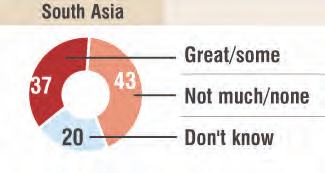
- Trust in South Asia: More people report little or no trust in political parties than report some or great trust.
- Global pattern: Political parties are among the least trusted institutions in most democracies.
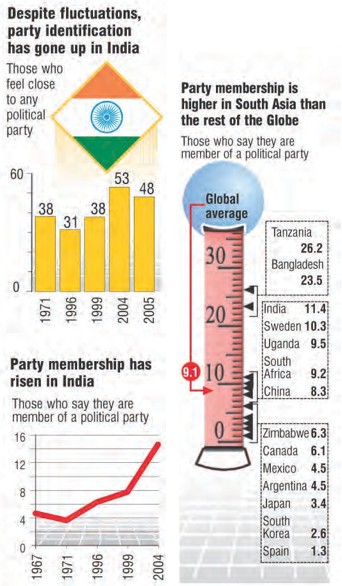
- Participation in India: Despite low trust, party activity attracts substantial participation; party membership in India is higher than in Canada, Japan, Spain and South Korea.
- Long-term trend: Over the last three decades, the share of Indians reporting party membership has steadily risen.
- Party connection: The share of people in India who say they feel close to a political party has also increased.
- One-party system
- A system in which only one party is allowed to control and run the government.
- Two-party system
- A system in which two main parties have a serious chance of winning enough seats to form the government.
- Multiparty system
- A system in which more than two parties can gain power alone or in alliances.
- Coalition
- A government formed by parties coming together.
- Alliance or front
- Parties joining hands to contest elections and seek power.
Why is a one-party system not considered democratic?
Why has India developed a multiparty system?
What contrast do surveys show about political parties in India?
Quick recap
- India has many registered parties, but only a handful are usually serious contenders.
- One-party systems deny free competition; two-party and multiparty systems allow parties to compete.
- In multiparty systems, parties may form alliances, fronts and coalition governments.
- Party systems evolve from a country’s society, divisions, history and electoral system; none is ideal everywhere.
- India’s diversity supports a multiparty system that can represent varied interests, though it may bring instability.
- Political parties have low public trust, yet participation and party connections in India have increased over time.
National Parties & State Parties
Political Parties in a Federation
| Category | Vote requirement | Seat requirement |
|---|---|---|
| State party | At least 6% of votes in a State Legislative Assembly election | At least 2 seats in that State Assembly |
| National party | At least 6% of votes in Lok Sabha elections or Assembly elections in 4 States | At least 4 Lok Sabha seats |
National Parties
| Party | Formation | Main ideas, base and role | 2019 Lok Sabha result stated in the text |
|---|---|---|---|
| Aam Aadmi Party (AAP) | Formed on 26 November 2012, following the 2011 anti-corruption movement. | Promotes accountability, clean administration, transparency and good governance. The year after its formation, it became the second-largest party in the Delhi Assembly election and formed a government with INC support. It later emerged as a third political force in Gujarat after the 2022 Assembly election; it has formed governments in Delhi and Punjab. | 1 seat |
| Bahujan Samaj Party (BSP) | Formed in 1984 under Kanshi Ram. | Seeks power and welfare for the Bahujan Samaj, including Dalits, Adivasis and religious minorities. Inspired by Sahu Maharaj, Mahatma Phule, Periyar Ramaswami Naicker and B. R. Ambedkar. Its main base is Uttar Pradesh, with substantial presence in Madhya Pradesh, Chhattisgarh, Uttarakhand, Delhi and Punjab. It formed Uttar Pradesh governments several times with support from different parties. | About 3.63% of votes; 10 seats |
| Bharatiya Janata Party (BJP) | Founded in 1980 by reviving the Bharatiya Jana Sangh, founded in 1951 by Syama Prasad Mukherjee. | Aims to build a strong and modern India, drawing on ancient Indian culture, Deendayal Upadhyaya’s integral humanism and Antyodaya. Supports cultural nationalism (Hindutva), full integration of Jammu and Kashmir, a uniform civil code and a ban on religious conversions. Its support widened from the North and West to other regions and rural areas. It came to power in 1998 as leader of the NDA and currently leads the ruling NDA government at the Centre. | Largest party; 303 seats |
| Communist Party of India–Marxist (CPI-M) | Founded in 1964. | Follows Marxism-Leninism; supports socialism, secularism and democracy, and opposes imperialism and communalism. Accepts elections as a means to pursue socioeconomic justice. Strong support among workers, farmers, agricultural labourers and intellectuals, especially in West Bengal, Kerala and Tripura. Criticises policies allowing free flows of foreign capital and goods; governed West Bengal continuously for 34 years. | About 1.75% of votes; 3 seats |
| Indian National Congress (INC) | Founded in 1885; one of the world’s oldest parties and has experienced many splits. | Played a dominant role at national and state levels for decades after Independence. Under Jawaharlal Nehru, it aimed to build a modern, secular, democratic republic. A centrist party supporting secularism, welfare for weaker sections and minorities, and economic reforms with a human face. It has a nationwide presence across social divisions. | 19.5% of votes; 52 seats |
| National People’s Party (NPP) | Formed in July 2013 under P. A. Sangma. | The first party from North-East India to gain national-party status. Recognises regional differences and prioritises education, employment and empowerment. Formed a government in Meghalaya and is present in several North-Eastern states. | 1 seat |
National Parties: Political Roles
- BJP: Its support base increased substantially in the 1990s; it was earlier strongest in northern and western India and urban areas.
- INC: It ruled at the Centre until 1977 and again from 1980 to 1989. After 1989, its support declined; it led the UPA government from 2004 to 2019.
- CPI-M: It was critical of new economic policies that encouraged the free flow of foreign capital and goods.

Key Dates and Political Milestones
- 1885The Indian National Congress was founded.
- 1951Syama Prasad Mukherjee founded the Bharatiya Jana Sangh, the predecessor of the BJP.
- 1964The CPI-M was founded.
- 1977The Congress Party’s period of rule at the Centre up to this point ended.
- 1980The BJP was founded; Congress returned to power at the Centre for the period 1980–1989.
- 1984The BSP was formed under Kanshi Ram.
- After 1989Congress support declined, though the party continued to have a nationwide presence.
- 1990sThe BJP’s support base grew substantially.
- 1998The BJP came to power as leader of the National Democratic Alliance (NDA).
- 2004–2019The Congress-led United Progressive Alliance (UPA) was in government.
- 2011The anti-corruption movement preceded the formation of the AAP.
- 26 November 2012The AAP was formed.
- July 2013The NPP was formed.
- 34 yearsThe CPI-M governed West Bengal without a break for this period.
- Until 2014No single national party was able to secure a Lok Sabha majority on its own.
- 2019The text reports the listed national parties’ Lok Sabha results for this election.
- 2022After the Gujarat Assembly election, the AAP emerged as a third force in the state’s politics.
- 2023The ECI notification classified six parties as recognised national parties.
State Parties
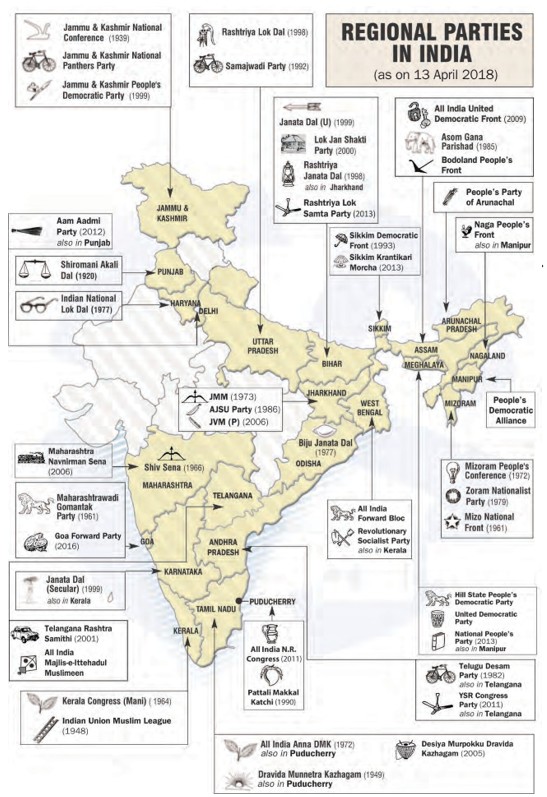
State Parties and Federalism
- State parties grew in number and strength over the preceding three decades.
- Parliament became more politically diverse.
- National parties increasingly needed alliances with State parties to form governments.
- Since 1996, nearly every State party has had an opportunity to join a national-level coalition government.
- Coalition participation contributed to stronger federalism and democracy.
| Point | National parties | State parties |
|---|---|---|
| Area of recognition and influence | Recognised for meeting the ECI’s national-party criteria | Recognised for electoral strength in particular state(s); commonly called regional parties |
| Organisation and outlook | State units generally follow policies and strategies decided nationally | May focus on state identity, but can also have a wider organisation or outlook |
| Role in government | Can lead national coalitions | Often join national coalitions and influence government formation |
State the ECI criteria for recognition as a State party and as a national party.
How have State parties contributed to Indian federalism?
Quick recap
- The ECI recognises parties using prescribed vote and seat thresholds; recognised parties receive special facilities, including an exclusive symbol for official candidates.
- The ECI’s 2023 notification listed six recognised national parties: AAP, BSP, BJP, CPI-M, INC and NPP.
- National parties operate across states, while State parties are commonly called regional parties but may have wider organisations or outlooks.
- The AAP formed a Delhi government with INC support; the BSP has formed Uttar Pradesh governments with support from different parties; the BJP currently leads the ruling NDA government at the Centre.
- The growth of State parties encouraged coalition politics and contributed to stronger federalism and democracy.
Challenges to Political Parties
Why political parties face criticism
The need to address challenges
- Central role: Political parties are the most visible face of democracy and are often blamed when democracy does not work well.
- Public dissatisfaction: People criticise parties when they fail to perform their functions effectively.
- Four problem areas: Parties must overcome these challenges to remain effective instruments of democracy.
Lack of internal democracy
Lack of internal democracy — A party lacks internal democracy when its ordinary members have little say in its organisation and decisions.
How it occurs and its effects
- Power at the top: Decision-making becomes concentrated in one or a few leaders.
- Weak party processes: Parties may lack membership registers, regular organisational meetings and regular internal elections.
- Members excluded: Ordinary members receive little information and lack the means or connections to influence decisions.
- Consequences: Leaders gain excessive power; dissenters struggle to remain in the party, and personal loyalty to leaders can outweigh loyalty to party principles and policies.
Internal democracy: cause and effect
- Few open party processes
- Ordinary members have little influence
- Leaders make decisions with concentrated power
- Dissent becomes difficult; loyalty to leaders may replace loyalty to party principles
Dynastic succession
Dynastic succession — Dynastic succession is the practice of party leaders favouring relatives or close associates for important party positions.
Why it happens and why it harms democracy
- Limited advancement: Without open and transparent procedures, ordinary party workers have few opportunities to rise to top positions.
- Unfair advantage: Leaders can favour people close to them, including family members; in some parties, one family controls top posts.
- Democratic harm: People without adequate experience or popular support may gain power, while other party members are treated unfairly.
- Extent: This tendency exists to some degree around the world, including in some older democracies.
Dynastic succession: cause and effect
- Few open, transparent party procedures
- Ordinary workers have limited routes to leadership
- Leaders favour relatives or close associates
- Inexperienced or weakly supported people may occupy positions of power
Money and muscle power
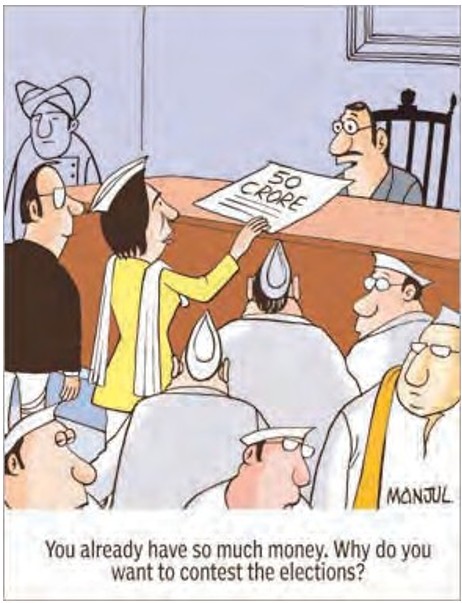
Money and muscle power in politics — This challenge is the growing influence of wealth and force in parties, especially during elections.
How it affects parties and democracy
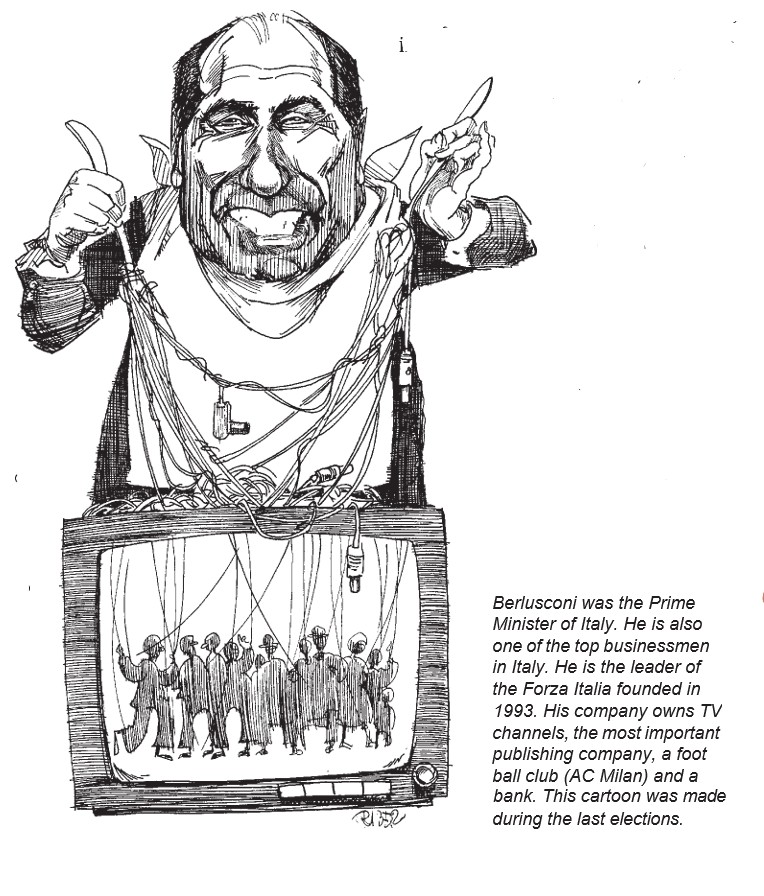
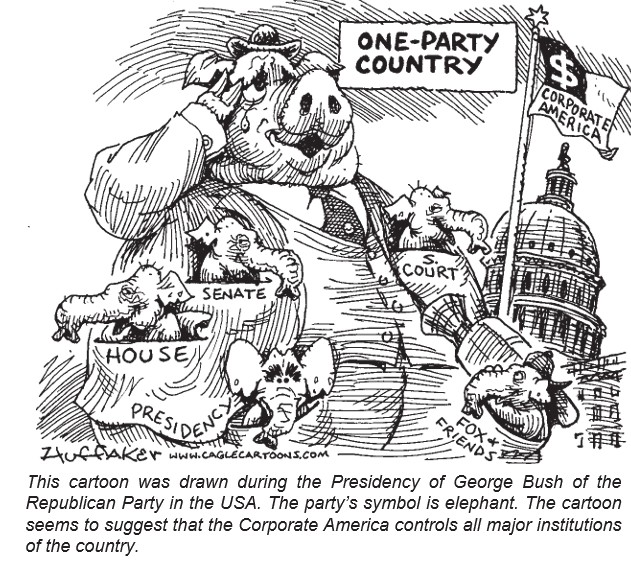
- Election focus: Parties seeking to win elections may use shortcuts and nominate candidates who have or can raise large sums of money.
- Donor influence: Rich individuals and companies that fund parties may influence party policies and decisions.
- Criminal support: Some parties support candidates with criminal backgrounds if they believe they can win.
- Democratic concern: The growing role of wealthy people and large companies in politics worries democrats worldwide.
Lack of meaningful choice
Lack of meaningful choice — Voters lack meaningful choice when parties are not significantly different in their policies or leaders.
Why voter choice may be limited
- Declining ideological differences: In many parts of the world, parties have become less distinct in their ideas and policies.
- Britain: The Labour Party and the Conservative Party differ little on fundamental issues; they mainly differ in policy details and implementation.
- India: Major parties have become more similar in their economic policies, leaving voters seeking very different policies with few options.
- Similar leaders: Voters may also struggle to choose different leaders when the same leaders move from one party to another.
- Internal democracy
- Participation by party members in party organisation and decision-making.
- Dynastic succession
- Leaders favouring relatives or close associates for party positions.
- Muscle power
- The use or influence of force in political competition.
- Meaningful choice
- A real choice among parties with significantly different policies and leaders.
Name and briefly explain the four major challenges faced by political parties.
Quick recap
- Political parties face four major challenges that can weaken their role in democracy.
- Lack of internal democracy concentrates decision-making in a few leaders and limits members' influence.
- Dynastic succession gives relatives or close associates an unfair path to party leadership.
- Money and muscle power can affect candidate selection, party decisions and election contests.
- Declining policy differences and shifting leaders can leave voters with little meaningful choice.
How Can Parties Be Reformed?
Reforms Already Introduced
| Reform | Purpose / Effect | Limitation |
|---|---|---|
| Constitutional amendment against defection | An MLA or MP changing parties loses their legislative seat; this reduced defection. | It can make dissent difficult because legislators may have to follow party leaders’ decisions. |
| Supreme Court order on candidate affidavits | Candidates must declare their property and pending criminal cases, making information public. | There is no system to verify the information, and its effect on the influence of wealth and crime is uncertain. |
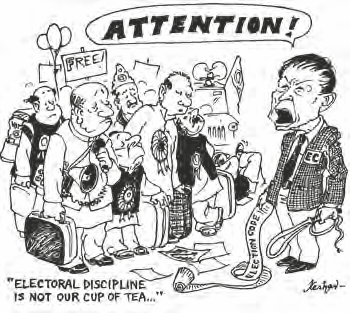
| Election Commission order | Parties must hold organisational elections and file income tax returns. | These steps may be treated as formalities; their effect on internal democracy is unclear. |
- Defection
- Changing allegiance from the party on which a person was elected to another party.
- Affidavit
- A signed, sworn statement submitted to an officer, including information such as a candidate’s property and pending criminal cases.
Further Suggestions for Reform
| Area | Suggested reform |
|---|---|
| Internal party democracy | Require parties to keep a membership register, follow their constitution, appoint an independent authority to decide disputes, and hold open elections to top posts. |
| Women’s representation | Require parties to give about one-third of their election tickets to women and reserve places for women in party decision-making bodies. |
| Election expenses | Introduce state funding: government support could be provided in kind, such as petrol, paper and telephone services, or as cash based on votes received in the previous election. |
Limits of Legal Reform
- Status: These suggestions have not yet been accepted by political parties; if adopted, they could improve party functioning.
- Caution: Excessive regulation can backfire by encouraging parties to find ways around the law.
- Practical limit: Parties may refuse to pass laws that they do not support.
How Citizens Can Help Reform Parties
| Approach | How it works |
|---|---|
| Public pressure | Citizens, pressure groups, movements and the media can use petitions, publicity and agitations. Parties may take reform more seriously if ignoring it risks public support. |
| Public participation | People who want change can join political parties and work for improvement from within. |
- Democracy improves when citizens participate, not merely criticise politics from outside.
- Bad politics is best addressed through more and better politics.
What is the anti-defection law, and what is one limitation of it?
State three suggestions for reforming political parties.
How can citizens contribute to party reform?
Quick recap
- The anti-defection law reduced party-switching but may limit dissent by elected representatives.
- Candidate affidavits disclose property and pending criminal cases, but their information is not independently verified.
- Organisational elections and tax returns are required, though they may be only formalities.
- Proposed reforms include stronger internal democracy, greater representation of women and state funding of elections.
- Over-regulation may be counterproductive, and parties may resist laws they do not support.
- Citizens can press parties to reform or join them; democracy depends on public participation.
Social Science — ALL CHAPTERS
1
RESOURCES AND DEVELOPMENT
2
FOREST AND WILDLIFE RESOURCES
3
WATER RESOURCES
4
AGRICULTURE
5
MINERALS AND ENERGY RESOURCES
6
MANUFACTURING INDUSTRIES
7
LIFELINES OF NATIONAL ECONOMY
1
POWER SHARING
2
FEDERALISM
3
GENDER, RELIGION AND CASTE
4
POLITICAL PARTIES
5
OUTCOMES OF DEMOCRACY
1
THE RISE OF NATIONALISM IN EUROPE
2
NATIONALISM IN INDIA
3
THE MAKING OF A GLOBAL WORLD
4
THE AGE OF INDUSTRIALISATION
5
PRINT CULTURE AND THE MODERN WORLD
1
DEVELOPMENT
2
SECTORS OF THE INDIAN ECONOMY
3
MONEY AND CREDIT
4
GLOBALISATION AND THE INDIAN ECONOMY
5
CONSUMER RIGHTS