Class 10 . Social Science . Democratic Politics II . Power Sharing
Chapter 1: POWER SHARING
Ch 1
Social Science
Class 10
Introduction
Power Sharing in a Democracy
- Core idea: Democracy works best when political power is shared rather than concentrated in one place or group.
- Chapter focus: The examples of Belgium and Sri Lanka show how different approaches to power-sharing affect social harmony and national unity.
The Chapter’s Focus
- Power-sharing: Power is distributed among government institutions and across different levels and groups in society.
- Democratic principle: People affected by decisions should have a voice in how they are governed.
- Purpose: Sharing power helps reduce social conflict and supports political stability and national unity.
- Forms: Power may be shared among government organs, levels of government, social groups, and political parties or pressure groups.
Quick recap
- Democracy requires that power not be concentrated in one government organ.
- The legislature, executive and judiciary share government power.
- Belgium and Sri Lanka illustrate how democracies respond to demands for power-sharing.
- The stories lead to general conclusions about why power-sharing is needed.
- Different forms of power-sharing are discussed in the following two chapters.
Belgium and Sri Lanka
Power Sharing in Democracy
- Comparative examples: Belgium and Sri Lanka illustrate two different ways democracies respond to demands for power-sharing.
- Main lesson: Accommodating diverse communities can protect national unity, while refusing to share power can deepen conflict.
Ethnic Composition and Community Tensions
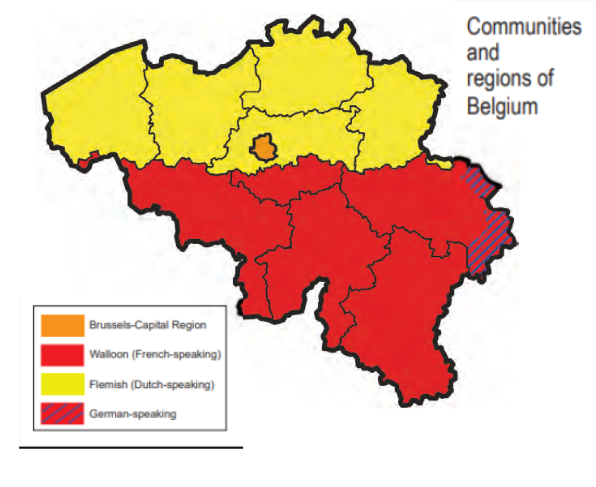
| Country | Majority situation | Risk if power is imposed |
|---|---|---|
| Belgium | Dutch speakers were the national majority but a minority in Brussels. | A national majority could impose its will on French- and German-speaking communities; competing claims over Brussels could lead to partition. |
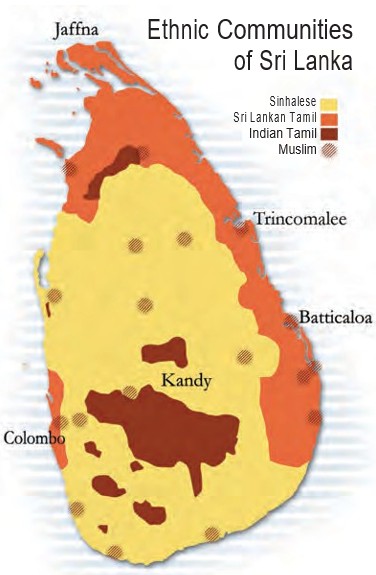
| Sri Lanka | The Sinhala-speaking community had a larger majority. | The Sinhala majority could impose its will on the Tamil-speaking population. |
Majoritarianism in Sri Lanka
From Majoritarian Policies to Civil War
- Sinhala-majority policies restricted Tamil language recognition and favoured Sinhala people in education and government employment.
- Tamils experienced discrimination and growing alienation.
- Tamil parties and groups demanded official recognition of Tamil, regional autonomy, and equal opportunities in education and jobs.
- Demands for greater autonomy in Tamil-populated provinces were repeatedly denied; by the 1980s, organisations demanded an independent Tamil Eelam in the north and east.
- Distrust escalated into civil war, killing thousands from both communities, forcing families to flee as refugees and causing many to lose their livelihoods.
Civil war — A violent conflict between opposing groups within one country that becomes intense enough to resemble a war.
Impact and End of the Civil War
- Impact: The war caused a severe setback to Sri Lanka’s social, cultural and economic life, despite its strong record in economic development, education and health.
- End: The civil war ended in 2009.
Key Developments
- 1948Sri Lanka became independent.
- 1950s–1960sTensions between Dutch- and French-speaking communities in Belgium grew, especially in Brussels.
- 1956An Act made Sinhala the sole official language of Sri Lanka.
- 1980sTamil organisations demanded an independent Tamil Eelam in northern and eastern Sri Lanka.
- 2009The Sri Lankan civil war ended.
- Ethnic
- A social division based on shared culture and a belief in common descent.
- Majoritarianism
- Rule by the majority while disregarding minority needs and wishes.
- Regional autonomy
- The ability of a region to govern some of its own affairs.
- Civil war
- Intense violent conflict between groups within the same country.
What measures established Sinhala supremacy in Sri Lanka?
What did Sri Lankan Tamils demand, and what was the outcome?
Quick recap
- In a democracy, power is shared among the legislature, executive and judiciary rather than held by one organ alone.
- Belgium has Dutch-, French- and German-speaking communities; Brussels has a French-speaking majority.
- Belgium’s Dutch-speaking community was a national majority but a minority in Brussels, creating a risk of conflict over the capital.
- In Sri Lanka, about 74% speak Sinhala and 18% speak Tamil; Sri Lankan Tamils are 13% and Indian Tamils 5% of the population.
- Sri Lanka’s Sinhala-speaking majority adopted policies that privileged Sinhala language and Buddhism.
- Discrimination and denied autonomy demands increased Tamil alienation and distrust; the civil war caused deaths, displacement and major national damage and ended in 2009.
Accommodation in Belgium
Belgium’s Power-Sharing Arrangements
Constitutional Changes
- 1970–1993Belgium amended its Constitution four times to create arrangements that respected regional and cultural differences.
| Arrangement | How it works | Purpose |
|---|---|---|
| Central government | Dutch-speaking and French-speaking ministers have equal numbers. | Neither major linguistic community can dominate the central government. |
| Special laws | They need the support of a majority of members in each linguistic group. | One community cannot make decisions unilaterally. |
| State governments | Many central powers are transferred to the governments of the two regions; these governments are not subordinate to the centre. | Regional interests receive decision-making power. |
| Brussels government | Brussels has a separate government with equal representation for both communities. | The French-speaking community accepted equality in Brussels because Dutch speakers accepted equality at the centre. |
| Community government | Elected by people of each language community—Dutch, French or German—wherever they live. | It handles cultural, educational and language-related matters. |
Language and National Unity
- Languages: Belgium has Dutch-, French- and German-speaking communities; Brussels uses both French and Dutch, including on public signs.
- Outcome: The arrangements have helped prevent civic conflict between the major communities and reduced the risk of the country splitting along linguistic lines.
- European Union: Brussels was chosen as the headquarters when European countries came together to form the European Union.
| Point | Belgium | Sri Lanka |
|---|---|---|
| Approach | Leaders respected different communities and regions and established mutually acceptable power-sharing arrangements. | The majority community sought dominance and refused to share power adequately. |
| Effect | Power sharing supported national unity. | Majoritarianism could undermine national unity. |
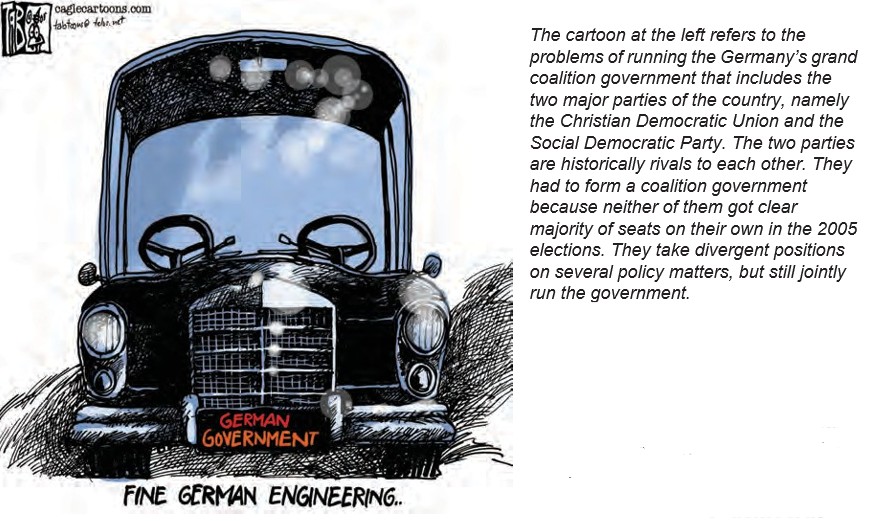
Why Power Sharing Is Desirable
| Reason | Basis | Why it matters |
|---|---|---|
| Prudential | Careful consideration of gains and losses; power sharing can produce better outcomes. | It reduces conflict between social groups, helping prevent violence and political instability and protecting national unity. |
| Moral | Power sharing is valuable in itself and is part of the spirit of democracy. | People affected by decisions have a right to be consulted and participate; participation gives citizens a stake in the system and strengthens government legitimacy. |
Majority Rule Without Power Sharing
- A majority imposes its will on minorities
- Minority groups face oppression and social conflict increases
- Conflict may lead to violence and political instability
- The country’s unity—and ultimately the majority’s interests—can also be harmed
- Prudential reason
- A reason based on carefully weighing likely gains and losses.
- Moral reason
- A reason based on the value of power sharing and democratic participation in themselves.
- Community government
- A government elected by members of one language community to manage cultural, educational and language matters.
Whose parents are more likely to succeed in obtaining their child’s preferred medium of instruction: Annette’s or Selvi’s?
Quick recap
- Belgium amended its Constitution four times between 1970 and 1993 to accommodate regional and cultural differences.
- Equal representation and special-law protections prevent either major linguistic group from deciding alone.
- Regional state governments and language-based community governments hold important powers.
- Belgium’s arrangements helped reduce conflict and protect national unity; Brussels became the European Union’s headquarters.
- Prudential reasons support power sharing for its beneficial outcomes, such as stability.
- Moral reasons value power sharing as a democratic right and as meaningful participation.
Forms of Power-sharing
Why Power Is Shared
- Earlier view: Political power was thought to belong in one person or group, because distributing it was believed to slow decisions and enforcement.
- Democratic principle: People are the source of political power and govern themselves through institutions.
- Inclusive government: Diverse groups and views should have a voice in shaping public policies; power should be shared as widely as possible.
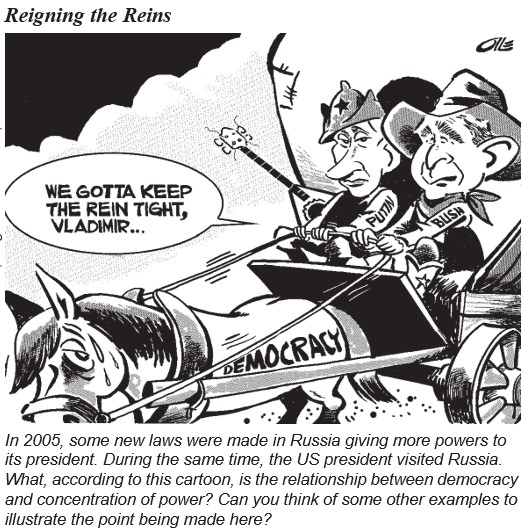
Power Shared Among Government Organs
Horizontal distribution of power — Power is divided among government organs at the same level, such as the legislature, executive and judiciary.
- Purpose: Separate powers prevent any one organ from exercising unlimited power.
- Checks and balances: Each organ can limit or check the others, maintaining a balance of power.
- Examples: Ministers and officials are accountable to Parliament or State Assemblies; judges can review executive actions and laws made by legislatures.
Power Shared Among Levels of Government
Vertical distribution of power — Power is divided among higher and lower levels of government, such as national, state and local governments.
- National level: The general government for the whole country is called the federal government; in India it is the Central or Union Government.
- Regional level: In India, provincial or regional governments are called State Governments.
- Constitutional division: In countries with multiple levels of government, the constitution lays down their powers. Belgium adopted this arrangement; Sri Lanka did not.
- Local level: The division can extend below the state level to municipalities and panchayats.
Power Shared Among Social Groups
Power-sharing among social groups — Power is distributed among groups such as religious and linguistic communities, as well as socially weaker sections and women.
- Belgium: Community government is an example of power-sharing among social groups.
- Representation: Constitutional or legal arrangements, including reserved constituencies in India, help weaker sections and women gain representation in legislatures and administration.
- Purpose: Giving diverse groups a fair share of power reduces alienation and helps minority communities participate in government.
Power Shared Through Parties and Groups
- Political competition: Citizens choose among parties competing for power, preventing power from remaining in one hand.
- Long-term sharing: Different parties represent different ideologies and social groups, so power can shift among them over time.
- Coalition government: Two or more parties may form an alliance to contest elections; if elected, they share power in a coalition government.
- Pressure groups and movements: Groups such as traders, industrialists, farmers and industrial workers influence government through committees or by affecting decision-making.
- Checks and balances
- A system in which government organs check one another to prevent unlimited power.
- Horizontal distribution
- Power-sharing among government organs at the same level.
- Vertical distribution
- Power-sharing among higher and lower levels of government.
- Coalition government
- A government formed by two or more parties that share power.
What is horizontal power-sharing, and why is it important?
Name the four main forms of power-sharing.
Quick recap
- Democracy requires people and diverse groups to have a voice in public decisions.
- Horizontal sharing divides power among the legislature, executive and judiciary.
- Checks and balances prevent any government organ from becoming unlimited in power.
- Vertical sharing divides authority among national, state and local governments.
- Social-group representation, including reserved constituencies, gives minorities and weaker sections a share in power.
- Political competition, coalitions and organised groups influence or share governmental power.
Social Science — ALL CHAPTERS
1
RESOURCES AND DEVELOPMENT
2
FOREST AND WILDLIFE RESOURCES
3
WATER RESOURCES
4
AGRICULTURE
5
MINERALS AND ENERGY RESOURCES
6
MANUFACTURING INDUSTRIES
7
LIFELINES OF NATIONAL ECONOMY
1
POWER SHARING
2
FEDERALISM
3
GENDER, RELIGION AND CASTE
4
POLITICAL PARTIES
5
OUTCOMES OF DEMOCRACY
1
THE RISE OF NATIONALISM IN EUROPE
2
NATIONALISM IN INDIA
3
THE MAKING OF A GLOBAL WORLD
4
THE AGE OF INDUSTRIALISATION
5
PRINT CULTURE AND THE MODERN WORLD
1
DEVELOPMENT
2
SECTORS OF THE INDIAN ECONOMY
3
MONEY AND CREDIT
4
GLOBALISATION AND THE INDIAN ECONOMY
5
CONSUMER RIGHTS