QUESTION PAPER
2023 BOARD EXAM
CBSE Class 12 PCM Chemistry Board Paper 2023 — Set 3
2023
Chemistry
Class 12 PCM
CBSE EXAMINATION PAPER-2023
CHEMISTRY
(Solved)
General Instructions :
Read the following instructions carefully and follow them :
- This question paper contains 41 questions. All questions are compulsory.
- This question paper is divided into 5 sections.
- Section A – questions number 1 to 3 are case based questions
- Section B – questions number 4 to 21 are multiple choice questions
- Section C – questions number 22 to 30 are very short answer
- Section D – questions number 31 to 36 are short answer
- Section E – questions number 37 to 41 are long answer
- There is no overall choice given in the question paper. However, an internal choice has been provided in few questions.
- Use of calculator is NOT allowed.
Section A
The following questions are case-based questions. Read the case carefully and answer the questions that follow
The polarity of C- X bond of alkyl halides is responsible for their nucleophilic substitution, elimination and their reaction with metal atoms to form organometallic compounds. Alkyl halides are prepared by the free radical halogenation of alkanes, addition of halogen acids to alkenes, replacement of - OH group of alcohols with halogens using phosphorus halides, thionyl chloride or halogen acids. Aryl halides are prepared by electrophilic substitution of arenes. Nucleophilic substitution reactions are categorised into SN1 and SN2 on the basis of their kinetic properties. Chirality has a profound role in understanding the SN1 and SN2 mechanism.
(1) What happens when bromobenzene is treated with Mg in the presence of dry ether ?
(2) Write the equations for the preparation of 1-iodobutane from (1) 1-chlorobutane (2) but-1-ene.
(3) Which compound in each of the following pairs will react faster in SN1 reaction with OH- ? (1) CH₂ = CH- CH₂- Cl or CH₃- CH₂- CH₂- Cl (2) (CH₃)₃C- Cl or CH₃Cl
(4) Write the structure of the major products in each of the following reactions :
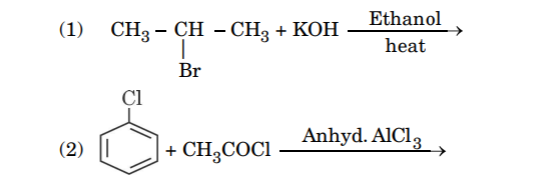 [2 Marks]
Coordination compounds are widely present in the minerals, plant and animal worlds and are known to play many important functions in the area of analytical chemistry, metallurgy, biological systems and medicine. Alfred Werner's theory postulated the use of two types of linkages (primary and secondary), by a metal atom/ion in a coordination compound. He predicted the geometrical shapes of a large number of coordination entities using the property of isomerism. The Valence Bond Theory (VBT) explains the formation, magnetic behaviour and geometrical shapes of coordination compounds. It, however, fails to describe the optical properties of these compounds. The Crystal Field Theory (CFT) explains the effect of different crystal fields (provided by the ligands taken as point charges) on the degeneracy of d-orbital energies of the central metal atom/ion.
(1) When a coordination compound NiCl₂ . 6H₂O is mixed with AgNO₃ solution, 2 moles of AgCl are precipitated per mole of the compound. Write the structural formula of the complex and secondary valency for Nickel ion.
(2) Write the IUPAC name of the ionisation isomer of [Co(NH₃)₅(SO₄)]Cl.
(3) Using Valence Bond Theory, predict the geometry and magnetic nature of : (1) [Ni(CO)₄] (2) [Fe(CN)₆]³⁻ [Atomic number : Ni = 28, Fe = 26]
(4) Give reasons : (1) Low spin tetrahedral complexes are not formed. (2) [Co(NH₃)₆]³⁺ is an inner orbital complex whereas [Ni(NH₃)₆]²⁺ is an outer orbital complex. [Atomic number : Co = 27, Ni = 28]
Section B
Which of the following is not true about enantiomers?
Aspirin is obtained by the acetylation of which of the following compounds?
The reactivities of the carbonyl compounds HCHO (I), CH₃CHO (II) and CH₃COCH₃ (III) towards nucleophilic addition reaction decreases in the order:
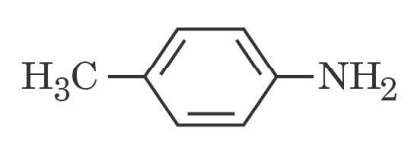
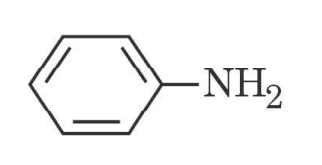
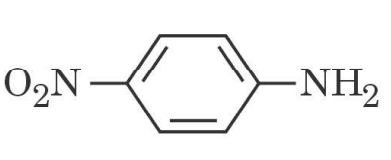
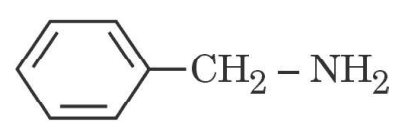
Among the following, which is the strongest base?
-
(A)
-
(B)
-
(C)
-
(D)
On hydrolysis, which of the following carbohydrates gives only glucose?
Which of the following vitamins is water soluble?
The unit of the rate of reaction is the same as that of the rate constant for a:
Kohlrausch gave the following relation for strong electrolyte:
Λ = Λ₀ - A√C Which of the following equality holds true?
An azeotropic mixture of two liquids has a boiling point higher than either of the two liquids when it:
Which of the following colligative property is used to find the molar mass of proteins?
Among the following outermost configurations of transition metals which one shows the highest oxidation state?
How many ions are produced in the solution from the complex [Ni(NH₃)₆]Cl₂?
Which of the following species is not expected to be a ligand?
Which of the following is the most stable complex species?
Assertion (A) : Order and molecularity of a reaction are always same.
Reason (R) : Complex reactions involve a sequence of elementary reactions and the slowest step is rate determining.
Assertion (A) : Electrolysis of aqueous solution of NaCl gives chlorine gas at anode instead of oxygen gas.
Reason (R) : Formation of oxygen gas at anode requires overpotential.
Assertion (A) : Nucleophilic substitution of iodoethane is easier than chloroethane.
Reason (R): Bond energy of C Cl bond is less than C I bond.
Assertion (A): Zinc is not regarded as a transition element.
Reason (R): In zinc, 3d orbitals are completely filled in its ground state as well as in its oxidised state.
Section C
Write the structures and IUPAC names of the products expected from the following reactions:
(a) Reaction of methanal with (CH₃)₂CHMgBr followed by hydrolysis.
(b) Reaction of phenol with conc. HNO₃ .
A chemical reaction 2N₂O₅ (g) ⟶ 4NO₂ (g) + O₂ (g) in gas phase was carried out in a closed vessel. The concentration of NO2 was found to increase by 5* 10⁻³ mol L⁻¹ in 10 seconds. Calculate :
(a) the rate of formation of NO₂.
(b) the rate of consumption of N₂O₅ .
Define fuel cell and write its two advantages.
(i) How are carbohydrates stored in animal body ? Mention any one organ where they are present.
(ii) What is the basic structural difference between starch and cellulose ?
Differentiate between :
(i) Peptide linkage and Glycosidic linkage
(ii) Nucleoside and Nucleotide
Give reasons for the following :
(a) Carboxylic carbon is less electrophilic than Carbonyl carbon of aldehydes and ketones.
(b) Propanal is more reactive than Propanone towards addition of HCN.
Write the chemical equation involved in the following reactions :
(a) Carbylamine reaction
(b) Gabriel phthalimide synthesis
Give reasons for the following :
(a) Aquatic animals are more comfortable in cold water in comparison to warm water.
(b) Sprinkling of salt helps in clearing the snow-covered roads in hilly areas.
Using E° values of X and Y given below, predict which is better for coating the surface of Iron to prevent corrosion and why ?
Given : E° X²⁺/X = -2.36V
E° Y²⁺/Y = -0.14V
E° Fe²⁺/Fe = -0.44V
Section D
(a) Write the mechanism of the following reaction :
(b) Write the equation of the reaction for the preparation of phenol from cumene.

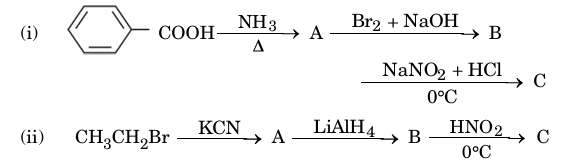
Write the structures of A, B and C in the following reactions :
0.3 g of acetic acid (M = 60 g mol⁻¹) dissolved in 30 g of benzene shows a depression in freezing point equal to 0.45 °C. Calculate the percentage association of acid if it forms a dimer in the solution.
(Given : Kf for benzene = 5.12 K kg mol⁻¹)
The rate of a reaction doubles when temperature changes from 27 °C to 37 °C. Calculate energy of activation for the reaction.
(R = 8 .314 J K⁻¹ mol⁻¹)
(Given : log 2 = 0.3010, log 3 = 0.4771, log 4 = 0.6021)
Write the structure of product when D-Glucose reacts with the following : (any three)
(a) HI
(b) Conc. HNO₃
(c) Br₂ water
(d) HCN
How will you convert the following :
(i) Aniline to p-bromoaniline
(ii) Ethanoic acid to methanamine
(iii) Butanenitrile to 1-aminobutane
Section E
(i) Account for the following:
(1) Transition metals form complex compounds;
(2) The E°Mn²⁺/Mn value for manganese is highly negative whereas E°Mn²⁺/Mn is highly positive.
(3) Cu²⁺ ion is unstable in aqueous solution.
(ii) Write the equations involved in the preparation of KMnO₄ from Pyrolusite ore (MnO₂).
(i) Identify the following :
(1) Transition metal of 3d series that exhibits only one oxidation state.
(2) Transition metal of 3d series that acts as a strong reducing agent in +2 oxidation state in aqueous solution.
(ii) Complete and balance the following equations :
(1) Cr₂O²⁻₇ + 14H⁺ + 6Fe²⁺ ⟶
(2) KMnO₄ (heat) ⟶
(iii) What is Misch metal ? Write its one use.
(i) An organic compound (X) having molecular formula C₅H₁₀O can show various properties depending on its structures. Draw each of the structures if it
(1) gives positive iodoform test.
(2) shows Cannizzaro's reaction
(3) reduces Tollens' reagent and has a chiral carbon.
(ii) Write the reaction involved in the following :
(1) Wolff-Kishner reduction
(2) Hell-Volhard-Zelinsky reaction
(i) How can you convert each of the following compounds to Benzoic acid ?
(1) Acetophenone
(2) Ethylbenzene
(3) Bromobenzene
(ii) Arrange the following compounds in increasing order of their property as indicated :
(1) O₂N -CH₂ -COOH, F -CH₂- COOH, CN- CH₂COOH (Acidic character)
(2) Ethanal, Propanal, Butanone, Propanone (Reactivity in nucleophilic addition reactions)
(a) Calculate the emf of the following cell at 25° C :
Zn (s) | Zn²⁺ (0.1M) || H⁺ (0.01M) | H (g) (1 bar), Pt (s)
[Given: E° Zn²⁺/Zn = -0.76V, E° H⁺/H = 0.00V, log 10 = 1]
(b) State Kohlrausch law of independent migration of ions. Why does the conductivity of a solution decrease with dilution ?
Paper Details
CBSE Board Exam 2023
Class
Class 12 PCM
Subject
Chemistry
Year
2023
Set
Set 3
Other Years — Chemistry