QUESTION PAPER
2023 BOARD EXAM
CBSE Class 12 PCM Chemistry Board Paper 2023 — Set 4
2023
Chemistry
Class 12 PCM
CBSE EXAMINATION PAPER-2023
CHEMISTRY
(Solved)
General Instructions :
Read the following instructions carefully and follow them :
- This question paper contains 41 questions. All questions are compulsory.
- This question paper is divided into 5 sections.
- Section A – questions number 1 to 3 are case based questions
- Section B – questions number 4 to 21 are multiple choice questions
- Section C – questions number 22 to 30 are very short answer
- Section D – questions number 31 to 36 are short answer
- Section E – questions number 37 to 41 are long answer
- There is no overall choice given in the question paper. However, an internal choice has been provided in few questions.
- Use of calculator is NOT allowed.
Section A
The following questions are case-based questions. Read the case carefully and answer the questions that follow.
Living systems are made up of various complex biomolecules like carbohydrates, proteins, nucleic acids, lipids, etc. Carbohydrates are optically active polyhydroxy aldehydes or ketones or molecules which provide such units on hydrolysis. They are broadly classified into three groups monosaccharides, oligosaccharides and polysaccharides. Monosaccharides are held together by glycosidic linkages to form disaccharides like sucrose, maltose or polysaccharides like starch and cellulose. Another biomolecule : proteins are polymers of -amino acids which are linked by peptide bonds. Ten amino acids are called essential amino acids. Structure and shape of proteins can be studied at four different levels i.e. primary, secondary, tertiary and quaternary, each level being more complex than the previous one.
(1) What is the difference between a glycosidic linkage and peptide linkage ?
(2) Which amino acids are called essential amino acids ?
(3) What are the common types of secondary structures of proteins ? Write any two forces which stabilise the secondary and tertiary structures of protein.
(4) Define denaturation of protein with an example. During denaturation which structures of protein lose their biological activity ?
Amines are usually formed from nitro compounds, halides, amides, imides, etc. They exhibit hydrogen bonding which influences their physical properties. In alkyl amines, a combination of electron releasing, steric and hydrogen bonding factors influence the stability of the substituted ammonium cations in protic polar solvents and thus affect the basic nature of amines. In aromatic amines, electron releasing and withdrawing groups, respectively increase and decrease their basic character. Influence of the number of hydrogen atoms at nitrogen atom on the type of reactions and nature of products is responsible for identification and distinction between primary, secondary and tertiary amines. Presence of amino group in aromatic ring enhances reactivity of the aromatic amines. Aryl diazonium salts provide advantageous methods for producing aryl halides, cyanides, phenols and arenes by reductive removal of the diazo group.
(1) Arrange the following in the increasing order of their pKb aqueous solution : C₂H₅NH₂,(C₂H₅)₂ NH (C₂H₅)₃N
(2) Aniline on nitration gives a substantial amount of m-nitroaniline, though amino group is o/p directing. Why ?
(3) An aromatic compound 'A' of molecular formula C₇H₆O₂ on treatment with aqueous ammonia and heating forms compound 'B'. Compound 'B' on heating with Br₂ and aqueous KOH gives a compound 'C' of molecular formula C₆H₇N. Write the structures of A, B, and C.
(4) Complete the following reactions giving main products :
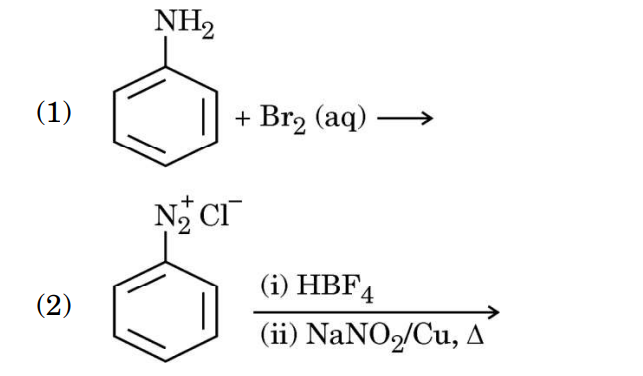 [3 Marks]
Section B
A compound undergoes complete tetramerization in a given organic solvent. The van'ts Hoff factor 'i' is:
The half-life for a zero order reaction equals:
(where R is the initial concentration)
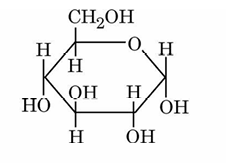
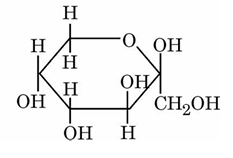
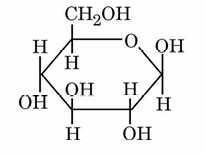
Which of the following structures represents -D-glucose ?
-
(A)
-
(B)
-
(C)
-
(D)
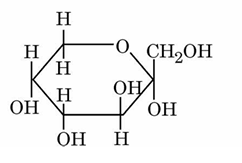
The ions of metals of Group 12 (Zn, Cd and Hg) have completely filled d orbitals and so they:
[Co(NH₃)₅NO₃]SO₄ and [Co(NH₃)₅SO₄]NO₃ exhibit:
Reaction of 1-phenyl-2-chloropropane with alcoholic KOH gives mainly:
When diethyl ether is heated with excess of HI, it produces:
The reduction of ethanenitrile with sodium and alcohol gives:
How many Faradays are required to reduce 1 mol of MnO₄⁻ to Mn²⁺ ?
In a reaction, the initial concentration of the reactants increases four fold and the rate becomes sixteen times its initial value. The order of the reaction is:
On hydrolysis, which of the following carbohydrates gives only glucose?
Deficiency of which of the following vitamins causes Pernicious anaemia?
This reaction is known as:

In which of the following does the central atom exhibit an oxidation state of +3?
Assertion (A) : When NaCl is added to water, a depression in freezing point is observed.
Reason (R) : The lowering of vapour pressure of a solution causes depression in the freezing point.
Assertion (A) : ⋀ₘ for weak electrolytes shows a sharp decrease when the electrolytic solution is diluted. Reason (R) : For weak electrolytes, degree of dissociation increases with dilution of solution.
Assertion (A) : Zr and Hf have almost identical radii.
Reason (R) : Both Zr and Hf exhibit similar properties.
Assertion (A) : Monobromination of aniline can be conveniently done by protecting the amino group by acetylation.
Reason (R) : Acetylation decreases the activating effect of the amino group.
Section C
An alkyl halide (A) of molecular formula C₆H₁₃Cl on treatment with alcoholic KOH gives two isomeric alkenes (B) and (C) of molecular formula C₆H₁₂. Both alkenes on hydrogenation give 2,3-dimethylbutane. Write the structures of (A), (B) and (C).
What type of deviation from Raoult's Law is shown by a mixture of ethanol and acetone ? Give reason.
Define Azeotrope. What type of azeotrope is formed by negative deviation from Raoult's law? give an example .
Name the cell which :
(a) was used in the Apollo Space programme.
(b) is used in automobiles and inverters.
(c) is suitable for hearing aids and watches.
(d) does not give a steady potential and is used in transistors.
Write the mechanism of the following reaction:

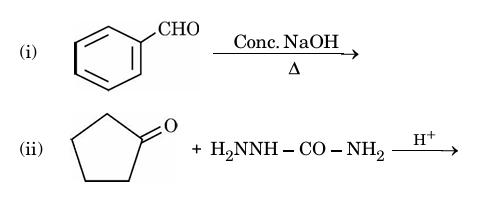
Write the products of the following reactions:
Do the following conversions:
(i) Toluene to Benzoic acid.
(ii) Benzaldehyde to 1-Phenylethanol.
Write IUPAC name of the following coordination entities :
(a) [Co(NH₃)₄Cl(NO₂)]Cl
(b) [PtCl₂(en)₂]²⁺
The rate constant for the first order decomposition of N₂O₅ is given by the following equation :
log k = 23.6 - 2* 10⁴K/T
Calculate Eₐ for this reaction.
[R = 8.314 J K⁻¹ mol ⁻¹ ]
Section D
(i) Write hydroboration-oxidation reaction with an example.
(ii) Write the products of the following reaction :
(iii) Why is p-nitrophenol more acidic than phenol?
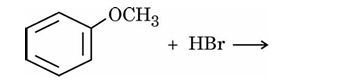
(i) What happens when phenol reacts with
(1) Conc. HNO₃, and
(2) CHCl₃ in presence of aqueous NaOH followed by acidification ? Write equations only.
(ii) Why does the reaction of CH3ONa with (CH₃)₃C-Br give 2-methylpropene and not (CH₃)₃C -OCH₃ ?
Account for the following :
(a) Benzyl chloride is highly reactive towards SN1 reaction.
(b) (±)-Butan-2-ol is optically inactive, though it contains a chiral carbon atom.
(c) Chloroform is stored in closed dark coloured bottles.
Answer any three of the following questions:
(a) Explain the type of hybridization in [Fe(CN)₆]³⁻ on the basis of valence bond theory. (Given : Atomic number of Fe = 26)
(b) Draw the geometrical isomers of [PtCl₂(en)₂]²⁺ ion.
(c) [NiCl4]²⁻ is paramagnetic while [Ni(CO)₄] is diamagnetic though both are tetrahedral. Why ?
(d) Name the type of isomerism when ambidentate ligands are attached to central metal ion. Give one example of ambidentate ligand.
If benzoic acid (M = 122 g mol ⁻¹ ) is associated into a dimer when dissolved in benzene and the osmotic pressure of a solution of 6.1 g of benzoic acid in 100 mL benzene is 6.5 atm at 27°C, then what is the percentage association of benzoic acid ? (Given : R = 0.0821 L atm K⁻¹ mol ⁻¹ )
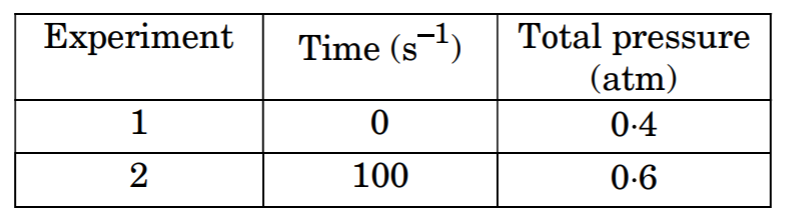
The following data were obtained during the first order thermal decomposition of C₂H₅Cl, at a constant volume : C₂H₅Cl ⟶ C₂H₄ (g) + HCl (g)
Experiment, =1 Time = 0, Total pressure (atm) = 0.4
Experiment = 2, Time = 100, Total pressure (atm) = 0.6
Calculate the rate constant.
(Given: log 2 = 0.3010, log 3 = 0.4771, log 4 = 0.6021)
Section E
(i) Calculate the emf of the following cell at 298 K:
Al (s) | Al³⁺ (0.001M) || Ni²⁺ (0.1M) | Ni (s)
[Given: E° Al³⁺/Al = -1.66V, E° Ni²⁺/Ni =-0.25V, log 10 = 1]
(ii) With the help of a graph explain why it is not possible to determine Λ°ₘ for a weak electrolyte by extrapolating the molar conductivity (Λₘ) versus C¹ᐟ² curve as for strong electrolyte.
(i) The molar conductivities of NH₄⁺ and Cl⁻ ion are 73.8 S cm² mol⁻¹ and 76.2 S cm² mol-1 respectively. The conductivity of 0.1 M NH₄Cl is 1.29 x 10⁻² S cm⁻¹. Calculate its molar conductivity and degree of dissociation.
(ii) Calculate the half-cell potential at 298 K for the reaction
Zn²⁺ + 2e⁻ ⟶Zn
if [Zn²⁺] = 0.1M and E° Zn²⁺/Zn = -0.76V.
(i) Account for the following :
(1) Zn²⁺ salts are colourless while Ni²⁺ salts are coloured.
(2) Cr²⁺ is a strong reducing agent.
(3) Transition metals and their compounds show catalytic activities.
(ii) Write the ionic equations for the oxidizing action of MnO₄⁻ in acidic medium with:
(1) I⁻ ion, and ,
(2) Fe²⁺ ion.
(i) Name two oxometal anions of the 3d series of the transition metals in which the metal exhibits the oxidation state equal to its group number.
(ii) What is the effect of increasing pH on a solution of K₂Cr₂O₇?
(iii) Why is Cu⁺ not stable in aqueous solution?
(iv) Name a member of Lanthanoid series which is well-known to exhibit +4 oxidation state.
(v) Name two elements of 3d series which show anomalous electronic configuration.
(a) Draw structure of the 2,4-dinitrophenylhydrazone of benzaldehyde.
(b) Which acid of the following pair is a stronger acid ?
(c) Write the chemical equation involved in Rosenmund’s reduction.
(d) Why are α-hydrogen atoms of aldehydes and ketones acidic in nature?
(e) Write a chemical test to distinguish between Benzaldehyde and Benzoic acid.

Paper Details
CBSE Board Exam 2023
Class
Class 12 PCM
Subject
Chemistry
Year
2023
Set
Set 4
Other Years — Chemistry