QUESTION PAPER
2024 BOARD EXAM
CBSE Class 12 PCM Chemistry Board Paper 2024 — Set 3
2024
Chemistry
Class 12 PCM
CBSE EXAMINATION PAPER-2024
CHEMISTRY
(Solved)
General Instructions :
Read the following instructions carefully and follow them :
- This question paper contains 40 questions. All questions are compulsory.
- This question paper is divided into 5 sections.
- Section A – questions number 1 to 6 are case based questions
- Section B – questions number 7 to 22 are multiple choice questions
- Section C – questions number 23 to 28 are very short answer
- Section D – questions number 29 to 35 are short answer
- Section E – questions number 36 to 40 are long answer
- There is no overall choice given in the question paper. However, an internal choice has been provided in few questions.
- Use of calculator is NOT allowed.
Section A
The involvement of (n 1)d electrons in the behaviour of transition elements impart certain distinct characteristics to these elements. Thus, in addition to variable oxidation states, they exhibit paramagnetic behaviour, catalytic properties and tendency for the formation of coloured ions. The transition metals react with a number of non-metals like oxygen, nitrogen and halogens. KMnO 4 examples. and K 2 Cr 2 O 7 are common The two series of inner transition elements, lanthanoids and actinoids, constitute the f-block of the periodic table. In the lanthanoids, there is regular decrease in atomic size with increase in atomic number due to the imperfect shielding effect of 4f-orbital electrons which causes contraction. Answer the following questions :
The involvement of (n 1)d electrons in the behaviour of transition elements impart certain distinct characteristics to these elements. Thus, in addition to variable oxidation states, they exhibit paramagnetic behaviour, catalytic properties and tendency for the formation of coloured ions. The transition metals react with a number of non-metals like oxygen, nitrogen and halogens. KMnO 4 examples. and K 2 Cr 2 O 7 are common The two series of inner transition elements, lanthanoids and actinoids, constitute the f-block of the periodic table. In the lanthanoids, there is regular decrease in atomic size with increase in atomic number due to the imperfect shielding effect of 4f-orbital electrons which causes contraction. Answer the following questions :
The involvement of (n 1)d electrons in the behaviour of transition elements impart certain distinct characteristics to these elements. Thus, in addition to variable oxidation states, they exhibit paramagnetic behaviour, catalytic properties and tendency for the formation of coloured ions. The transition metals react with a number of non-metals like oxygen, nitrogen and halogens. KMnO 4 examples. and K 2 Cr 2 O 7 are common The two series of inner transition elements, lanthanoids and actinoids, constitute the f-block of the periodic table. In the lanthanoids, there is regular decrease in atomic size with increase in atomic number due to the imperfect shielding effect of 4f-orbital electrons which causes contraction. Answer the following questions :
The following questions are case-based questions. Read the case carefully and answer the questions that follow
The involvement of (n-1)d electrons in the behaviour of transition elements impart certain distinct characteristics to these elements. Thus, in addition to variable oxidation states, they exhibit paramagnetic behaviour, catalytic properties and tendency for the formation of coloured ions. The transition metals react with a number of non-metals like oxygen, nitrogen and halogens. KMnO₄ examples. and K₂Cr₂O₇ are common
The two series of inner transition elements, lanthanoids and actinoids, constitute the f-block of the periodic table. In the lanthanoids, there is regular decrease in atomic size with increase in atomic number due to the imperfect shielding effect of 4f-orbital electrons which causes contraction.
(1) Why do transition metals and their compounds act as good catalysts ?
(2) What is the cause of contraction in the atomic size of lanthanoids ?
(3) In aqueous media, which is a stronger reducing agent Cr²⁺ or Fe²⁺ and why ?
(4) Define lanthanoid contraction. How does it affect the atomic radii of the third transition series and the second transition series ?
(1) What are essential amino acids ?
[1 Mark](2) What is meant by zwitter ionic form of amino acids ?
[1 Mark](3) (i) Give one example each for Fibrous protein and Globular protein. (ii) What type of linkages hold monomers of proteins together?
(4) (i) What is the structural feature which characterises a reducing sugar ? (ii) What is the structural difference between nucleoside and nucleotide?
Section B
Which of the following does not show variable oxidation states?
The type of isomerism shown by the complex [CoCl₂(en)₂]⁺ is:
Which of the following is diamagnetic in nature?
[ Atomic number : Co = 27 ]
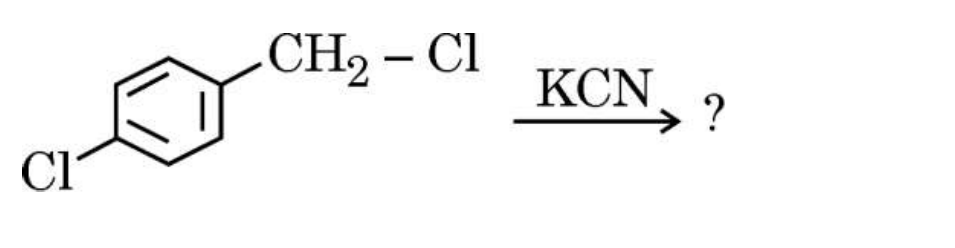
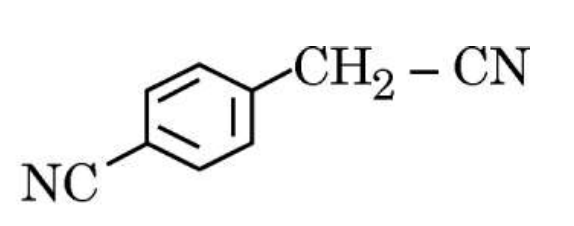
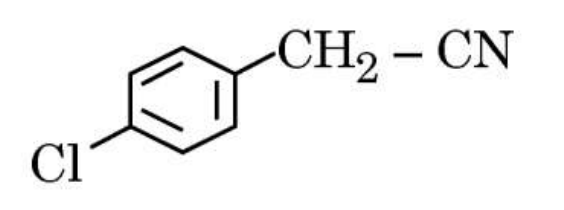
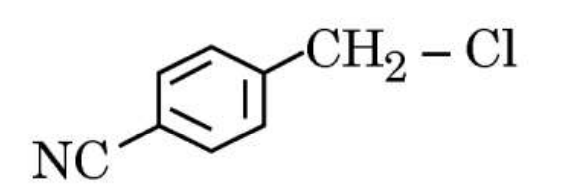
Consider the following reaction:
The major product of the reaction is:
-
(A)
-
(B)
-
(C)
-
(D)
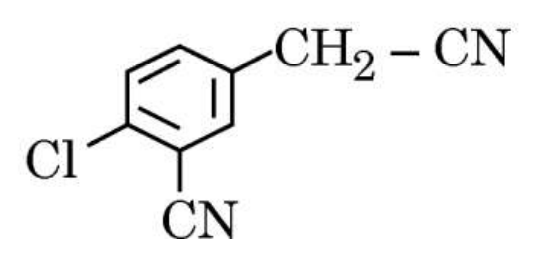
Which one of the following compounds has the lowest pKₐ value?
(CH₃)₂CH-O-CH₃ when treated with HI gives:
Which of the following compounds on treatment with benzene sulphonyl chloride forms an alkali-soluble precipitate?
The order of increasing basicities of CH₃NH₂ (I), (CH₃)₂NH (II), (CH₃)₃N (III) and C₆H₅NH₂ (IV) in aqueous media is:
The vitamin which plays an important role in coagulating blood is:
When a catalyst increases the rate of a chemical reaction, then the rate constant (k):
A 1% solution of solute 'X' is isotonic with 6% solution of sucrose (molar mass = 342 g mol⁻¹). The molar mass of solute 'X' is
During the electrolysis of aqueous NaCl, the cathodic reaction is:
Assertion (A): Addition of ethylene glycol to water lowers its freezing point.
Reason (R): Ethylene glycol is insoluble in water due to lack of its ability to form hydrogen bonds with water molecules.
Assertion (A): Order of reaction and molecularity are always same for complex reactions.
Reason(R): Order is determined experimentally and molecularity is applicable only for elementary reactions.
Assertion (A): The boiling point of ethanol is higher than that of dimethyl ether.
Reason (R): Ethanol molecules are associated through hydrogen bonding whereas in dimethyl ether, it is not possible.
Assertion (A): Aniline does not undergo Friedel-Crafts reaction.
Reason (R): Friedel-Crafts reaction is an electrophilic substitution reaction.
Section C
What type of deviation is shown by ethanol and acetone mixture? Give reason.What type of azeotropic mixture is formed by that deviation ?
(a) In a reaction, if the concentration of reaction 'X' is tripled rate of reaction becomes twenty-seven times? What is the order of the reaction .
(b) State a condition under which a bimolecular reaction is kinetically a first-order reaction. Give an example of such a reaction.
Complete the following ionic equations:
(a) 2Mno⁻₄ +5SO₃²⁻ +6H⁺ →
(b) Cr₂O₇²⁻ + 14H⁺ + 6Fe²⁺
(a) Which halogen compound will react faster in Sₙ2 reactions, and why?
CH₃- CH₂ -I or CH₃ - CH₂ - Br
(b) Why is chloroform stored in closed dark coloured bottles?
Give the reaction of glucose with the following :
(a) HCN
(b) Conc. HNO₃
Section D
A solution is prepared by dissolving 5 g of a non-volatile solute in 200 g of water. It has a vapour pressure of 31·84 mm Hg at 300 K. Calculate the molar mass of the solute.
(Vapour pressure of pure water at 300 K = 32 mm Hg)
A first-order reaction is 25 complete in 40 minutes. Calculate the value of rate constant. In what time will the reaction be 80 % complete ?
Given : log 2 = 0·30, log 3 = 0·48, log 4 = 0·60, log 5 = 0·69
(a) What type of nucleophilic substitution (SN1 or SN2) occurs in the hydrolysis of 2-Bromo butane to form (±)-Butan-2-ol ? Give reason.
(b) What happens when chlorobenzene and methyl chloride are treated with sodium metal in dry ether ?
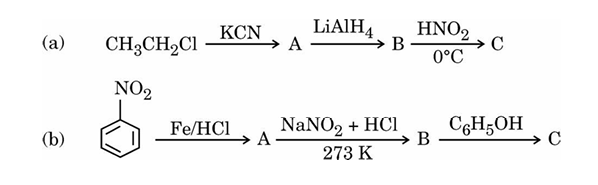
Give the structures of A, B and C in the following reactions :
(a) Write the equations of the reactions involved in the following :
(i) Reimer-Tiemann reaction
(ii) Kolbe's reaction
(b) Name the reagent used in the bromination of phenol to form 2,4,6-Tribromophenol.
How will you bring about the following conversions ?
(a) Benzoic acid to Benzaldehyde
(b) Ethanal to Propanone
(c) Acetophenone to Benzoic acid
(d) Bromobenzene to 1-Phenylethanol
The conductivity of 0·2 M solution of KCl is 2·48 10⁻² S cm⁻¹. Calculate its molar conductivity and degree of dissociation ( α).
Given :
λ°ₖ⁺ = 73.5 S cm² mol⁻¹
λ°cl⁻ = 76.5 S cm² mol⁻¹
Section E
(i) Calculate emf of the following cell at 25ºC :
Zn (s) |Zn²⁺ (0·001M)| Cd²⁺ (0·1 M) Cd (s)
Given:E °zn²⁺/zn= -0·76 V, E°cd²⁺/Cd = - 0·40 V [log 10 = 1]
(ii) State faraday 's second law of electrolysis How will the ph of aqueous NaCl solution be affected when it is electrolyzed?
(i) Calculate the ∆ᵣG° and log Kc for the following cell reaction :
Fe (s) + Ag⁺ (aq) ⇌ Fe²⁺ (aq) + Ag (s)
Given: E° fe²⁺/fe = -0.44V, E°Ag⁺/Ag= +0.80V, 1F = 96500 C mol⁻¹
(ii) Write any two advantages of the fuel cells over primary and secondary batteries ?
(iii) How many Faradays are required for the oxidation of 1 mole of H₂O to O₂ ?
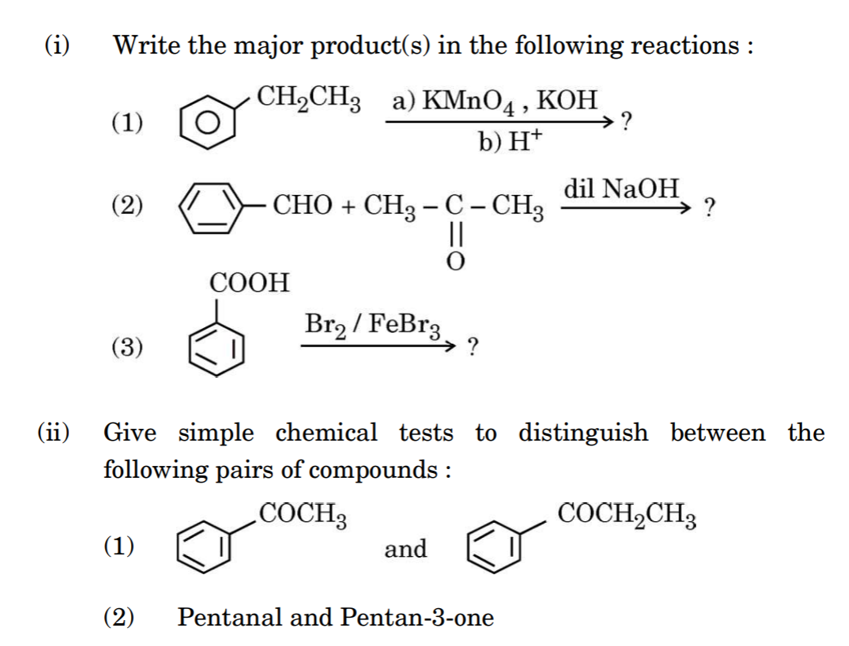
(i) Write the major product(s) in the following reactions :
(ii) Give simple chemical tests to distinguish between the following pairs of compounds :
(i) Give reasons for the following :
(1) In semicarbazide, only one NH₂ group is involved in the formation of semicarbazone.
(2) Acetaldehyde is more reactive than acetone towards addition of HCN.
(ii) (1) Arrange the following in decreasing order of their acidic strength :
CH₃COOH, O₂N CH₂ COOH, HCOOH
(2) Name the reagent in the following reaction :
CH₃- CH = CH-CH₂-CN ⟶ CH₃- CH = CH- CH₂ CHO
(iii) Write the reaction involved in Hell-Volhard-Zelinsky reaction.
Attempt any five of the following:
(a) Write the IUPAC name of the complex : [Co(H₂O)(CN)(en)₂]²⁺
(b) Why is geometrical isomerism not possible in tetrahedral complexes having two different types of unidentate ligands coordinated with the central metal ion ?
(c) Arrange the following complex ions in increasing order of their crystal field splitting energy ( Δₒ) :
[Co(NH₃)₆]³⁺, [CoF₆]³⁻ , [Co(CN)₆]³⁻
(d) Write the hybridization and magnetic character of the complex [Ni(CO)₄] on the basis of valence bond theory. [Atomic No. : Ni = 28]
(e) Out of [CoF₆]³⁻ and [Co(C₂O₄)₃]³⁻ , which one complex is :
(i) more stable ?
(ii) the high spin complex ?
(f) What is the difference between an ambidentate ligand and bidentate ligand ?
(g) Write the electronic configuration of d⁵ in terms of t₂g and eg in an
octahedral field when :
(i) Δₒ > P, and (ii) Δₒ <P
Paper Details
CBSE Board Exam 2024
Class
Class 12 PCM
Subject
Chemistry
Year
2024
Set
Set 3
Other Years — Chemistry