SOLUTIONS
2023 BOARD EXAM
CBSE Class 12 PCM Chemistry Board Paper 2023 — Set 3 Solutions
2023
Chemistry
Class 12 PCM
CBSE EXAMINATION PAPER-2023
CHEMISTRY
(Solved)
General Instructions :
Read the following instructions carefully and follow them :
- This question paper contains 41 questions. All questions are compulsory.
- This question paper is divided into 5 sections.
- Section A – questions number 1 to 3 are case based questions
- Section B – questions number 4 to 21 are multiple choice questions
- Section C – questions number 22 to 30 are very short answer
- Section D – questions number 31 to 36 are short answer
- Section E – questions number 37 to 41 are long answer
- There is no overall choice given in the question paper. However, an internal choice has been provided in few questions.
- Use of calculator is NOT allowed.
Section A
The following questions are case-based questions. Read the case carefully and answer the questions that follow
The polarity of C- X bond of alkyl halides is responsible for their nucleophilic substitution, elimination and their reaction with metal atoms to form organometallic compounds. Alkyl halides are prepared by the free radical halogenation of alkanes, addition of halogen acids to alkenes, replacement of - OH group of alcohols with halogens using phosphorus halides, thionyl chloride or halogen acids. Aryl halides are prepared by electrophilic substitution of arenes. Nucleophilic substitution reactions are categorised into SN1 and SN2 on the basis of their kinetic properties. Chirality has a profound role in understanding the SN1 and SN2 mechanism.
(1) What happens when bromobenzene is treated with Mg in the presence of dry ether ?
(2) Write the equations for the preparation of 1-iodobutane from (1) 1-chlorobutane (2) but-1-ene.
(2) But-1-ene reacts with hydrogen iodide (HI) to form 1-iodobutane by electrophilic addition: CH2=CHCH2CH3 + HI \u2192 C4H9I
These methods align with the case passage that alkyl halides can be prepared by halogen substitution and addition of halogen acids to alkenes.
(3) Which compound in each of the following pairs will react faster in SN1 reaction with OH- ? (1) CH₂ = CH- CH₂- Cl or CH₃- CH₂- CH₂- Cl (2) (CH₃)₃C- Cl or CH₃Cl
(2) (CH3)3C- Cl reacts faster than CH3Cl as tertiary carbocation formed is more stable, favoring SN1 mechanism.
This is due to polarity of C-X bond and carbocation stability shown in the case passage.
(4) Write the structure of the major products in each of the following reactions :
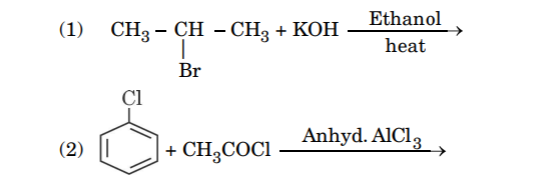 [2 Marks]
(1) Reactant: 2-bromopropane (isopropyl bromide)
Reagent: KOH in ethanol, heat → Alcoholic KOH favors elimination (E2).
So, dehydrohalogenation occurs:
CH3−CH(Br)−CH3alc. KOHheatCH2=CH−CH3+KBr+H2O
Major product: 👉 Propene (CH₂=CH–CH₃)
(2) Reactants: Chlorobenzene + CH₃COCl
Reagent: Anhydrous AlCl₃ → Friedel–Crafts acylation.
Cl is ortho/para directing (though deactivating).
Para product is major due to less steric hindrance.
So, acyl group –COCH₃ enters mainly at para position.
Major product: 👉 p-Chloroacetophenone
Structure (in words):
Benzene ring with Cl and –COCH₃ in para position.
i.e. 4-chloroacetophenone
Coordination compounds are widely present in the minerals, plant and animal worlds and are known to play many important functions in the area of analytical chemistry, metallurgy, biological systems and medicine. Alfred Werner's theory postulated the use of two types of linkages (primary and secondary), by a metal atom/ion in a coordination compound. He predicted the geometrical shapes of a large number of coordination entities using the property of isomerism. The Valence Bond Theory (VBT) explains the formation, magnetic behaviour and geometrical shapes of coordination compounds. It, however, fails to describe the optical properties of these compounds. The Crystal Field Theory (CFT) explains the effect of different crystal fields (provided by the ligands taken as point charges) on the degeneracy of d-orbital energies of the central metal atom/ion.
(1) When a coordination compound NiCl₂ . 6H₂O is mixed with AgNO₃ solution, 2 moles of AgCl are precipitated per mole of the compound. Write the structural formula of the complex and secondary valency for Nickel ion.
(2) Write the IUPAC name of the ionisation isomer of [Co(NH₃)₅(SO₄)]Cl.
(3) Using Valence Bond Theory, predict the geometry and magnetic nature of : (1) [Ni(CO)₄] (2) [Fe(CN)₆]³⁻ [Atomic number : Ni = 28, Fe = 26]
(2) In [Fe(CN)6]3-, Fe3+ has configuration 3d5 4s0. CN- is strong field leading to pairing of electrons and d2sp3 hybridisation giving octahedral geometry and diamagnetic behavior as electrons are paired. This explanation is based on VBT as stated in the case passage.
(4) Give reasons : (1) Low spin tetrahedral complexes are not formed. (2) [Co(NH₃)₆]³⁺ is an inner orbital complex whereas [Ni(NH₃)₆]²⁺ is an outer orbital complex. [Atomic number : Co = 27, Ni = 28]
(1) Low spin tetrahedral complexes are not formed because tetrahedral complexes have weak ligand fields and cause small splitting of d orbitals, which is never enough to force pairing of electrons. Hence, tetrahedral complexes are always high spin according to Crystal Field Theory.
(2) [Co(NH₃)₆]³⁺ is an inner orbital complex because Co³⁺ ion (d⁶ configuration) undergoes dsp2 hybridisation using 3d orbitals after pairing electrons. In contrast, [Ni(NH₃)₆]²⁺ is an outer orbital complex because Ni²⁺ ion (d࣡ configuration) uses s and p orbitals only (sp3 hybridisation) without pairing electrons in d orbitals. This explains their different electronic structures as described by Valence Bond Theory in the case passage.
Section B
Which of the following is not true about enantiomers?
Enantiomers are chiral molecules that are mirror images of each other. They have the same chemical reactivity, density, and melting or boiling points, but they possess different specific rotations because they rotate plane-polarized light in opposite directions. Thus, the correct option is that they have the same specific rotation, which is not true.
Aspirin is obtained by the acetylation of which of the following compounds?
The correct answer is Salicylic acid. Aspirin, also known as acetylsalicylic acid, is synthesized through the acetylation of salicylic acid, which introduces an acetyl group to the compound, leading to the formation of aspirin.
The reactivities of the carbonyl compounds HCHO (I), CH₃CHO (II) and CH₃COCH₃ (III) towards nucleophilic addition reaction decreases in the order:
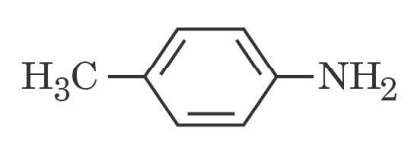
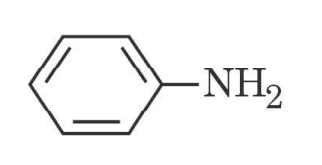
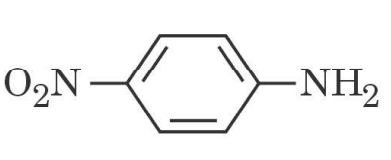
Among the following, which is the strongest base?
-
(A)
-
(B)
-
(C)
-
(D)
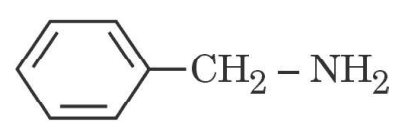
On hydrolysis, which of the following carbohydrates gives only glucose?
The correct answer is Starch. Starch is a polysaccharide made up entirely of glucose units. Upon hydrolysis, it breaks down into individual glucose molecules. Lactose and sucrose yield other monosaccharides upon hydrolysis; lactose yields glucose and galactose, while sucrose yields glucose and fructose.
Which of the following vitamins is water soluble?
Vitamin C is a water-soluble vitamin, meaning it dissolves in water and is readily absorbed by the body. In contrast, Vitamins A, E, and D are fat-soluble, which means they are stored in the body's fatty tissues.
The unit of the rate of reaction is the same as that of the rate constant for a:
The correct answer is 'first order reaction'. For a first order reaction, the rate of reaction is expressed as concentration per unit time (M/s), and the rate constant also has the same unit (s⁻¹). This means that their units are indeed the same, making this option correct.
Kohlrausch gave the following relation for strong electrolyte:
Λ = Λ₀ - A√C Which of the following equality holds true?
The correct option is Λ = Λ₀ as C → 0. This is because at infinite dilution (when concentration C approaches zero), the conductivity of the electrolyte is at its maximum, and the limiting molar conductivity (Λ₀) reflects this complete dissociation. Thus, as C approaches 0, the term A√C becomes negligible, leading to Λ = Λ₀.
An azeotropic mixture of two liquids has a boiling point higher than either of the two liquids when it:
The correct answer is 'shows large negative deviation from Raoult's law.' This is because a maximum boiling azeotrope, which has a boiling point higher than either of its components, results from large negative deviations from Raoult's law. The context explains that such mixtures involve stronger intermolecular attractions between the different components, leading to a boiling point that is higher than that of the individual liquids.
Which of the following colligative property is used to find the molar mass of proteins?
The correct option is 'Osmotic pressure' because it is a colligative property that depends on the number of solute particles in a solution. By measuring the osmotic pressure, we can determine the molar mass of the solute, which in this case can be proteins.
Among the following outermost configurations of transition metals which one shows the highest oxidation state?
The outermost configuration 3d⁵4s¹ corresponds to the highest oxidation state because it indicates one electron in the 4s subshell and five in the 3d subshell, allowing the metal to lose a total of six electrons when oxidized, maximizing the oxidation state.
How many ions are produced in the solution from the complex [Ni(NH₃)₆]Cl₂?
The complex [Ni(NH₃)₆]Cl₂ dissociates into one [Ni(NH₃)₆]^{2+} ion and two Cl^{-} ions in solution. Therefore, the total number of ions produced is 1 + 2 = 3.
Which of the following species is not expected to be a ligand?
The correct answer is NH₄⁺. A ligand is a molecule that can donate a pair of electrons to a metal ion to form a coordinate bond. NH₄⁺ (ammonium ion) does not have a lone pair of electrons to donate, whereas NH₃, CO, and H₂O do have available lone pairs to act as ligands.
Which of the following is the most stable complex species?
[Fe(CN)₆]³⁻ is the correct answer because cyanide (CN⁻) is a strong field ligand that forms stable complexes with iron, resulting in a high degree of stability due to strong ligand field stabilization. In comparison, other ligands such as oxalate (C₂O₄²⁻), carbon monoxide (CO), and water (H₂O) do not provide as much stability as cyanide.
Assertion (A) : Order and molecularity of a reaction are always same.
Reason (R) : Complex reactions involve a sequence of elementary reactions and the slowest step is rate determining.
Assertion (A) is false, but Reason (R) is true. The order of a reaction, which is determined by the rate law and the concentration of reactants, does not always match its molecularity, which is the number of molecules involved in an elementary reaction. Complex reactions can have different orders compared to their molecularity due to multiple steps involved.
Assertion (A) : Electrolysis of aqueous solution of NaCl gives chlorine gas at anode instead of oxygen gas.
Reason (R) : Formation of oxygen gas at anode requires overpotential.
Both Assertion (A) and Reason (R) are true, but Reason (R) is not the correct explanation of the Assertion (A). The assertion is true because during the electrolysis of NaCl solution, chlorine gas is preferentially produced at the anode due to the lower energy barrier for chlorine ion discharge compared to oxygen formation. The reason is also true, as the formation of oxygen does indeed require overpotential, but it does not directly explain why chlorine is formed instead of oxygen in this specific electrolysis scenario.
Assertion (A) : Nucleophilic substitution of iodoethane is easier than chloroethane.
Reason (R): Bond energy of C Cl bond is less than C I bond.
Assertion (A) is true, but Reason (R) is false. The nucleophilic substitution of iodoethane is indeed easier than that of chloroethane because the C-I bond is weaker than the C-Cl bond, making it easier for the nucleophile to attack and displace the iodine atom. However, the reason given in (R) is incorrect as it states the opposite regarding bond energies.
Assertion (A): Zinc is not regarded as a transition element.
Reason (R): In zinc, 3d orbitals are completely filled in its ground state as well as in its oxidised state.
Both Assertion (A) and Reason (R) are true, but Reason (R) is not the correct explanation of the Assertion (A). Zinc is not regarded as a transition element because it does not have an incomplete d subshell in either its elemental or oxidized state, as its 3d orbitals are fully filled. However, the reason does not explain why zinc is classified this way, since other factors also define transition metals.
Section C
Write the structures and IUPAC names of the products expected from the following reactions:
(a) Reaction of methanal with (CH₃)₂CHMgBr followed by hydrolysis.
(b) Reaction of phenol with conc. HNO₃ .
The structure is (CH₃)₂CH-CH₂OH.
(b) Phenol reacts with concentrated nitric acid (conc. HNO₃) undergoing electrophilic substitution to give mainly 2-nitrophenol and 4-nitrophenol. The nitro group (-NO₂) substitutes at ortho and para positions relative to the hydroxyl group due to activating effect of OH group.
Major products are shown as:
2-nitrophenol: OH group at carbon 1, NO₂ at carbon 2 (ortho)
4-nitrophenol: OH group at carbon 1, NO₂ at carbon 4 (para)
A chemical reaction 2N₂O₅ (g) ⟶ 4NO₂ (g) + O₂ (g) in gas phase was carried out in a closed vessel. The concentration of NO2 was found to increase by 5* 10⁻³ mol L⁻¹ in 10 seconds. Calculate :
(a) the rate of formation of NO₂.
(b) the rate of consumption of N₂O₅ .
Rate of formation of NO₂ = (5 * 10-3 mol L-1) / 10 s = 5 * 10-4 mol L-1 s-1.
(b) From the balanced equation 2N₂O₅ ⟶ 4NO₂ + O₂, 2 moles of N₂O₅ produce 4 moles of NO₂. So, rate of consumption of N₂O₅ is half the rate of formation of NO₂.
Rate of consumption of N₂O₅ = (1/2) * Rate of formation of NO₂ = (1/2) * 5 * 10-4 = 2.5 * 10-4 mol L-1 s-1.
Define fuel cell and write its two advantages.
Advantages of fuel cells: (1) Fuel cells are pollution free as they produce electricity without burning fuel and releasing harmful gases.
(2) They have higher efficiency of about 70% compared to thermal power plants which have about 40% efficiency.
(i) How are carbohydrates stored in animal body ? Mention any one organ where they are present.
(ii) What is the basic structural difference between starch and cellulose ?
(ii) The basic structural difference between starch and cellulose is that starch is made up of alpha glucose units linked mainly by alpha-1,4-glycosidic bonds while cellulose is made up of beta glucose units linked by beta-1,4-glycosidic bonds. This difference causes starch to be digestible by humans while cellulose is not.
Differentiate between :
(i) Peptide linkage and Glycosidic linkage
(ii) Nucleoside and Nucleotide
Glycosidic linkage: It is a bond formed between the sugar molecules in carbohydrates by linking the anomeric carbon of one sugar to the hydroxyl group of another.
(ii) Nucleoside: A molecule consisting of a nitrogenous base attached to the 1' position of a sugar (pentose).
Nucleotide: A nucleoside with one or more phosphate groups attached at the 5' position of the sugar.
Give reasons for the following :
(a) Carboxylic carbon is less electrophilic than Carbonyl carbon of aldehydes and ketones.
(b) Propanal is more reactive than Propanone towards addition of HCN.
(b) Propanal is more reactive than propanone towards HCN addition because propanal is an aldehyde and has only one alkyl group attached to the carbonyl carbon, resulting in less steric hindrance and less electron donation compared to propanone which is a ketone with two alkyl groups. Alkyl groups donate electron density, reducing electrophilicity of the carbonyl carbon, so propanal is more electrophilic and more reactive towards nucleophiles like HCN.
Write the chemical equation involved in the following reactions :
(a) Carbylamine reaction
(b) Gabriel phthalimide synthesis
Example:
R-NH2 + CHCl3 + 3KOH → R-NC + 3KCl + 3H2O
(b) Gabriel phthalimide synthesis:
This is used to prepare primary amines. Phthalimide reacts with potassium hydroxide to give potassium phthalimide, which then reacts with an alkyl halide to form N-alkyl phthalimide. Hydrolysis or hydrazinolysis of this compound yields the primary amine.
Steps:
Phthalimide + KOH → Potassium phthalimide + H2O
Potassium phthalimide + R-X → N-alkyl phthalimide + KX
N-alkyl phthalimide + Hydrazine (NH2-NH2) → Primary amine (R-NH2) + Phthalhydrazide
Give reasons for the following :
(a) Aquatic animals are more comfortable in cold water in comparison to warm water.
(b) Sprinkling of salt helps in clearing the snow-covered roads in hilly areas.
(b) Sprinkling salt on snow-covered roads lowers the freezing point of water, so the ice or snow melts even if the temperature is below 0 deg Celsius. This helps clear the roads and makes them safer for travel.
Using E° values of X and Y given below, predict which is better for coating the surface of Iron to prevent corrosion and why ?
Given : E° X²⁺/X = -2.36V
E° Y²⁺/Y = -0.14V
E° Fe²⁺/Fe = -0.44V
Section D
(a) Write the mechanism of the following reaction :
(b) Write the equation of the reaction for the preparation of phenol from cumene.

(a) This is acid-catalyzed dehydration of ethanol to give ethene at 443 K.
Below is a clean, exam-ready, copy-paste mechanism:
Step 1: Protonation of alcohol
CH3CH2OH+H+→CH3CH2OH2+
The –OH group is protonated to form a good leaving group (water).
Step 2: Loss of water (formation of carbocation)
CH3CH2OH2+→CH3CH2++H2O
Water leaves, forming an ethyl carbocation.
Step 3: Deprotonation (formation of alkene)
CH3CH2+→CH2=CH2+H+
A proton is removed from the β-carbon, giving ethene and regenerating the acid catalyst.
(b) Preparation of phenol from cumene: Cumene hydroperoxide is then treated with dilute acid (H2SO4) which causes rearrangement and cleavage of the hydroperoxide to produce phenol (C6H5OH) and acetone (CH3COCH3). The overall reaction is:
Cumene (C6H5CH(CH3)2) + O2 --oxidation--> Cumene hydroperoxide (C6H5C(CH3)2OOH)
Cumene hydroperoxide + H+ --acidic cleavage--> Phenol (C6H5OH) + Acetone (CH3COCH3)
Write the structures of A, B and C in the following reactions :
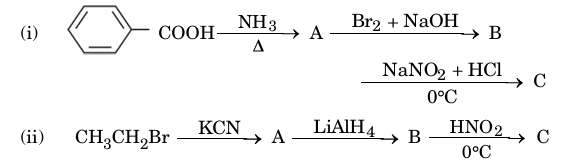
(i) Starting compound: Benzoic acid (C₆H₅–COOH)
Step 1: With NH₃, Δ
Carboxylic acid + NH₃ on heating gives amide.
C6H5COOH→NH3,ΔC6H5CONH2
A = Benzamide (C₆H₅CONH₂)
Step 2: With Br₂ + NaOH (Hofmann bromamide reaction)
Amide → amine with one carbon less.
C6H5CONH2 (Br2/NaOH) → C6H5NH2
B = Aniline (C₆H₅NH₂)
Step 3: With NaNO₂ + HCl at 0°C (diazotization)
Aniline → benzene diazonium chloride.
C6H5NH2 ( 0∘C , NaNO2 /HCl) → C6H5N2+Cl−
C = Benzene diazonium chloride (C₆H₅–N₂⁺Cl⁻)
(ii) Starting compound: Ethyl bromide (CH₃CH₂Br)
Step 1: With KCN
Alkyl halide + KCN → nitrile (chain length increases by one carbon).
CH3CH2Br→KCNCH3CH2CN
Step 2: With LiAlH₄
Nitrile is reduced to primary amine.
CH3CH2CN→LiAlH4CH3CH2CH2NH2
B = Propylamine (CH₃CH₂CH₂NH₂)
Step 3: With HNO₂ at 0°C
Primary aliphatic amine + HNO₂ → alcohol (via unstable diazonium).
CH3CH2CH2NH2→ 0∘C HNO2CH3CH2CH2OH
C = 1-Propanol (CH₃CH₂CH₂OH)
0.3 g of acetic acid (M = 60 g mol⁻¹) dissolved in 30 g of benzene shows a depression in freezing point equal to 0.45 °C. Calculate the percentage association of acid if it forms a dimer in the solution.
(Given : Kf for benzene = 5.12 K kg mol⁻¹)
Molality (m) = moles of solute / kg of solvent
Moles of acetic acid = 0.3 g / 60 g mol-1 = 0.005 mol
Mass of benzene = 30 g = 0.03 kg
Molality, m = 0.005 / 0.03 = 0.1667 mol kg-1
Step 2: Calculate the expected freezing point depression for non-association
ΔTf = Kf * m = 5.12 * 0.1667 = 0.853 °C
Step 3: Calculate effective molality from observed depression
Observed ΔTf = 0.45 °C
Effective molality, meff = ΔTf / Kf = 0.45 / 5.12 = 0.0879 mol kg-1
Step 4: Relate association and molality
Let the degree of association be α (fractions that form dimers). Initial moles = n = 0.005
Since molecules form dimers, the total number of particles after association = n * (1 - α) + n * α / 2 = n (1 - α/2)
So, effective molality meff = m * (1 - α/2)
From this, 0.0879 = 0.1667 * (1 - α/2)
1 - α/2 = 0.0879 / 0.1667 = 0.527
α/2 = 1 - 0.527 = 0.473
α = 0.946
Step 5: Calculate percentage association
Percentage association = α * 100 = 94.6%
Final answer: The percentage association of acetic acid forming dimers in benzene is 94.6%.
The rate of a reaction doubles when temperature changes from 27 °C to 37 °C. Calculate energy of activation for the reaction.
(R = 8 .314 J K⁻¹ mol⁻¹)
(Given : log 2 = 0.3010, log 3 = 0.4771, log 4 = 0.6021)
Given:
Rate constant ratio k2 / k1 = 2
Initial temperature T1 = 27 deg C = 27 + 273 = 300 K
Final temperature T2 = 37 deg C = 37 + 273 = 310 K
Gas constant R = 8.314 J mol-1 K-1
Using the Arrhenius equation ratio form:
ln(k2 / k1) = (Ea / R) * (1 / T1 - 1 / T2)
ln 2 = (Ea / 8.314) * (1 / 300 - 1 / 310)
ln 2 = 0.693 (approximate)
Calculate (1 / 300 - 1 / 310) = (310 - 300) / (300 * 310) = 10 / 93000 = 0.0001075
So,
0.693 = (Ea / 8.314) * 0.0001075
Ea = 0.693 * 8.314 / 0.0001075 = 53626 J/mol = 53.6 kJ/mol
Therefore, the energy of activation Ea for the reaction is approximately 53.6 kJ/mol.
Write the structure of product when D-Glucose reacts with the following : (any three)
(a) HI
(b) Conc. HNO₃
(c) Br₂ water
(d) HCN
(b) When D-Glucose reacts with concentrated HNO3, all the -CH2OH groups are oxidized to -COOH groups forming glucaric acid (saccharic acid).
(c) When D-Glucose reacts with Br2 water, the aldehyde group at C-1 is selectively oxidized to a carboxylic acid forming D-gluconic acid.
(d) When D-Glucose reacts with HCN, hydrogen cyanide adds to the aldehyde group forming a cyanohydrin intermediate known as glucose cyanohydrin.
How will you convert the following :
(i) Aniline to p-bromoaniline
(ii) Ethanoic acid to methanamine
(iii) Butanenitrile to 1-aminobutane
(ii) To convert Ethanoic acid to methanamine, first convert ethanoic acid to ethyl cyanide (ethanenitrile) by reaction with PCl5 followed by reaction with KCN. Then, reduce the nitrile using LiAlH4 or catalytic hydrogenation to obtain ethylamine. Finally, to get methanamine, instead directly convert methanoic acid to methanamide by heating with ammonia, followed by reduction with LiAlH4 to get methanamine.
(iii) To convert Butanenitrile to 1-aminobutane, reduce butanenitrile using LiAlH4 in dry ether. This reaction converts the nitrile group to a primary amine group, yielding 1-aminobutane as the product.
Section E
(i) Account for the following:
(1) Transition metals form complex compounds;
(2) The E°Mn²⁺/Mn value for manganese is highly negative whereas E°Mn²⁺/Mn is highly positive.
(3) Cu²⁺ ion is unstable in aqueous solution.
(ii) Write the equations involved in the preparation of KMnO₄ from Pyrolusite ore (MnO₂).
(i) Account for the following:
(1) Transition metals form complex compounds: Transition metals have partially filled d-orbitals which can accept lone pairs of electrons from ligands to form coordinate bonds. This ability leads to the formation of complex compounds where the metal ion is centrally bonded to surrounding ligands.
(2) The E⁺ for Mn²⁺/Mn is highly negative whereas E⁺ for MnO₄⁻/Mn²⁺ is highly positive: The standard electrode potential (E°) for Mn²⁺/Mn is highly negative because manganese metal is difficult to oxidize to Mn²⁺ due to its stable metallic state. However, the E° for MnO₄⁻/Mn²⁺ is highly positive because Mn in permanganate ion (MnO₄⁻) is in a very high oxidation state (+7), which makes it a strong oxidizing agent and easily reduced to Mn²⁺.
(3) Cu²⁺ ion is unstable in aqueous solution: Cu²⁺ ions have a strong tendency to gain electrons and get reduced to Cu±⁺ or metallic Cu due to the high stability of Cu±⁺ or Cu metal. Also, Cu²⁺ undergoes hydration that makes it susceptible to disproportionation or reduction in aqueous solution.
(ii) Preparation of KMnO₄ from Pyrolusite (MnO₂):
Step 1: Fusion with KOH and Oxidation
MnO₂ + 2KOH + (1/2)O₂ → KMnO₄ + H₂O
Step 2: Acidification and Disproportionation
KMnO₄ + HCl → KMnO₄ + MnCl₂ + KCl + H₂O
This process converts MnO₂ to potassium permanganate (KMnO₄), which is a strong oxidizing agent used in many applications.
(i) Identify the following :
(1) Transition metal of 3d series that exhibits only one oxidation state.
(2) Transition metal of 3d series that acts as a strong reducing agent in +2 oxidation state in aqueous solution.
(ii) Complete and balance the following equations :
(1) Cr₂O²⁻₇ + 14H⁺ + 6Fe²⁺ ⟶
(2) KMnO₄ (heat) ⟶
(iii) What is Misch metal ? Write its one use.
(1) Zn (Zinc) is the transition metal of 3d series that exhibits only one oxidation state, which is +2.
(2) Fe (Iron) in the +2 oxidation state acts as a strong reducing agent in aqueous solution.
(ii) Complete and balanced equations :
(1) Cr2O72- + 14H+ + 6Fe2+ ⟶ 2Cr3+ + 6Fe3+ + 7H2O
(2) 4KMnO4 (heat) ⟶ 4MnO2 + 3K2MnO4 + O2
(iii) Misch metal :
Misch metal is an alloy of rare earth metals, mainly Lanthanum (La) and Cerium (Ce) along with small amounts of other rare earth elements. It is used in manufacturing of lighters (flints) due to its easy ignition property.
(i) An organic compound (X) having molecular formula C₅H₁₀O can show various properties depending on its structures. Draw each of the structures if it
(1) gives positive iodoform test.
(2) shows Cannizzaro's reaction
(3) reduces Tollens' reagent and has a chiral carbon.
(ii) Write the reaction involved in the following :
(1) Wolff-Kishner reduction
(2) Hell-Volhard-Zelinsky reaction
(1) Gives positive iodoform test: This indicates presence of a methyl ketone group. An example is 2-pentanone.
Structure: CH3-CO-CH2-CH2-CH3
(2) Shows Cannizzaro's reaction: Compound must be an aldehyde without alpha hydrogen. Here pentanal cannot show Cannizzaro but an isomer like 3,3-dimethylbutanal (if possible). More correctly, the compound is an aldehyde with no alpha hydrogen, for example, pivaldehyde (2,2-dimethylpropanal): (CH3)3C-CHO
(3) Reduces Tollens' reagent and has chiral carbon: This is an aldehyde with at least one chiral center. Example: 3-methylbutanal (isovaleraldehyde). Structure: CH3-CH(CH3)-CH2-CHO
(ii) Reactions:
(1) Wolff-Kishner reduction:
It is the reduction of a carbonyl group (aldehyde or ketone) to a hydrocarbon by treating with hydrazine (NH2NH2) in alkaline medium and heat.
R-CO-R' + NH2NH2 → R-CH2-R' + N2 + H2O
(2) Hell-Volhard-Zelinsky reaction:
It is the alpha-halogenation of carboxylic acids in presence of PCl3 and halogen (Br2 or Cl2).
R-CH2-COOH + Br2 + PCl3 → R-CHBr-COCl (acyl halide) → R-CHBr-COOH after hydrolysis.
This reaction introduces a halogen atom at the alpha position of carboxylic acid.
Summary:
(i) (1) 2-pentanone; (2) pivaldehyde; (3) 3-methylbutanal
(ii) (1) Wolff-Kishner reduction converts carbonyl group to methylene group using hydrazine and base.
(2) Hell-Volhard-Zelinsky halogenates alpha carbon of carboxylic acid using halogen and PCl3.
(i) How can you convert each of the following compounds to Benzoic acid ?
(1) Acetophenone
(2) Ethylbenzene
(3) Bromobenzene
(ii) Arrange the following compounds in increasing order of their property as indicated :
(1) O₂N -CH₂ -COOH, F -CH₂- COOH, CN- CH₂COOH (Acidic character)
(2) Ethanal, Propanal, Butanone, Propanone (Reactivity in nucleophilic addition reactions)
1. Acetophenone to Benzoic acid: Acetophenone (C6H5COCH3) is oxidized using a strong oxidizing agent like alkaline potassium permanganate (KMnO4) under heating. The methyl group attached to the ketone is cleaved and converted to carboxyl group resulting in benzoic acid (C6H5COOH).
2. Ethylbenzene to Benzoic acid: Ethylbenzene (C6H5CH2CH3) on oxidation with alkaline KMnO4 and heat converts the side chain completely to a carboxyl group forming benzoic acid.
3. Bromobenzene to Benzoic acid: Bromobenzene (C6H5Br) is first reacted with magnesium in dry ether to form phenylmagnesium bromide (Grignard reagent). This is then reacted with carbon dioxide (dry ice) followed by acidic workup (H+) to give benzoic acid.
(ii) Arrangement of compounds:
1. Acidic character of substituted acetic acids: The acidic strength depends on the electron withdrawing nature of the substituent. The order is F-CH2-COOH (fluoro group, strong -I effect) > O2N-CH2-COOH (nitro group, strong -I effect) > CN-CH2-COOH (cyano group, moderate -I effect). So increasing order is CN-CH2-COOH < O2N-CH2-COOH < F-CH2-COOH.
2. Reactivity in nucleophilic addition: Aldehydes are generally more reactive than ketones because of less steric hindrance and less electron donation to the carbonyl carbon. Among aldehydes: ethanal (2 carbons) > propanal (3 carbons). Among ketones: propanone (acetone, 3 carbons) > butanone (4 carbons). So overall increasing order of reactivity is Butanone < Propanone < Propanal < Ethanal.
(a) Calculate the emf of the following cell at 25° C :
Zn (s) | Zn²⁺ (0.1M) || H⁺ (0.01M) | H (g) (1 bar), Pt (s)
[Given: E° Zn²⁺/Zn = -0.76V, E° H⁺/H = 0.00V, log 10 = 1]
(b) State Kohlrausch law of independent migration of ions. Why does the conductivity of a solution decrease with dilution ?
Given: Eo Zn2+/Zn = -0.76 V, Eo H+/H = 0.00 V, log 10 = 1.
The cell reaction is: Zn (s) -> Zn2+ (aq) + 2 e- (oxidation at anode)
2 H+ (aq) + 2 e- -> H2 (g) (reduction at cathode)
Standard emf, Eocell = Eocathode - Eoanode = 0.00 V - (-0.76 V) = +0.76 V.
Using Nernst equation:
Ecell = Eocell - (0.059 / n) * log Q, where n = 2 (number of electrons), Q = [Zn2+] / [H+]2 = 0.1 / (0.01)2 = 0.1 / 0.0001 = 1000.
log Q = log 1000 = 3.
Therefore, Ecell = 0.76 - (0.059 / 2) * 3 = 0.76 - 0.0885 = 0.6715 V.
Hence, the emf of the cell at 25 deg C is approximately 0.67 V.
(b) Kohlrausch law of independent migration of ions states that the total molar conductivity of an electrolyte at infinite dilution is the sum of the ionic contributions of the individual ions, each moving independently of others. In other words, each ion contributes to the total conductivity independent of the other ions present in the solution.
The conductivity of a solution decreases with dilution because as the solution is diluted, the number of ions per unit volume decreases, reducing the total charge carriers available to conduct electricity. Although molar conductivity increases with dilution due to decreased ion interactions, the overall conductivity decreases since it depends on both molar conductivity and concentration. Thus, dilution lowers conductivity as fewer ions are present in the solution volume to carry current.
Paper Details
CBSE Board Exam 2023
Class
Class 12 PCM
Subject
Chemistry
Year
2023
Set
Set 3
Other Years — Chemistry